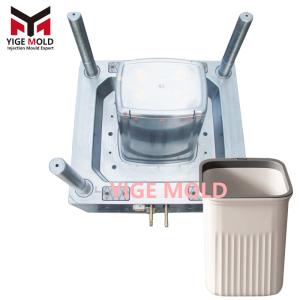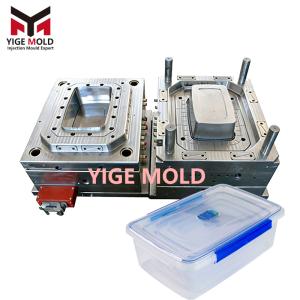
Bento box mold
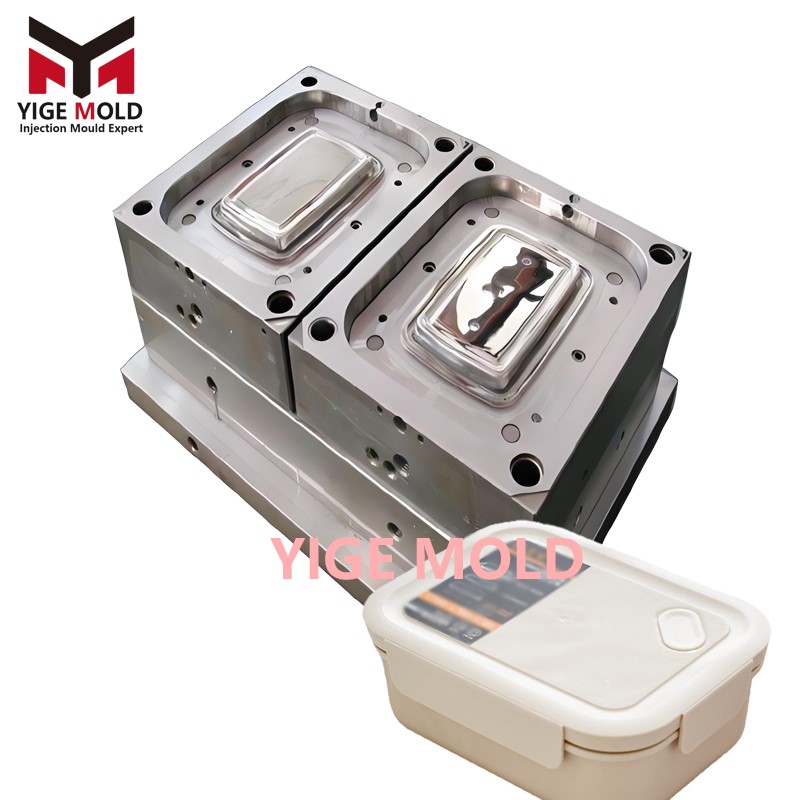
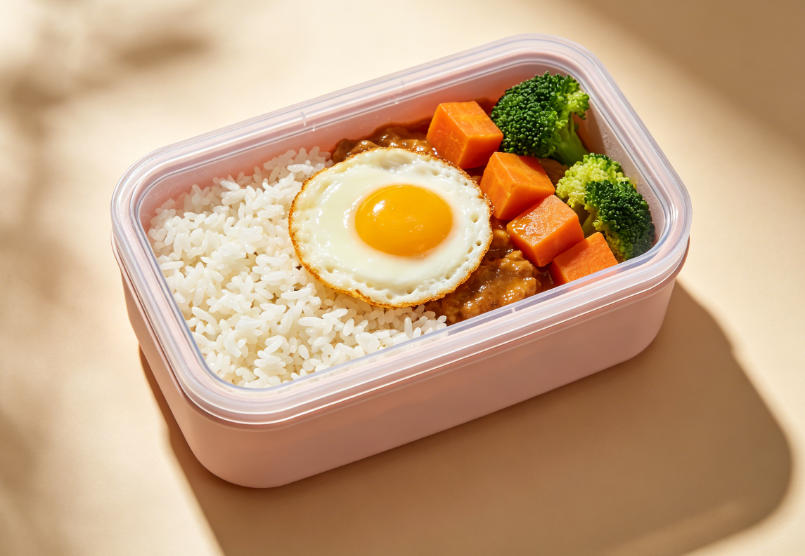 Bento Box Molds: Core Support and Technical Engine for the Advancement of the Meal Box Industry
Driven by the dual forces of fast-paced living and the growing demand for convenient consumption, bento boxes have become a core carrier for food delivery, home meal preparation, and campus dining. From basic plastic meal boxes to multi-compartment functional boxes, and from heat-resistant materials to portable designs, the product forms of bento boxes continue to evolve. At the heart of the industry's large-scale, standardized, and quality-driven development lies the bento box mold. It is not only the key forming equipment that transforms raw materials into practical meal boxes, but also directly determines the structural strength, sealing performance, usage safety, and production efficiency of the boxes, deeply linking the entire chain from raw material processing to final delivery. Whether it is the basic plastic bento boxes on supermarket shelves or multi-functional boxes meeting diverse scenario needs, the technical refinement and process accumulation of bento box molds remain the core engine driving the industry's upgrade, occupying an irreplaceable and crucial position in the modern food packaging manufacturing system.
I. Mold Design: Precise Planning and Functional Breakthroughs Centered on Scenario Adaptation
The design of bento box molds is a systematic project integrating material properties, forming processes, usage scenarios, and safety standards. Its core lies in scientific structural planning and meticulous detail control, enabling the mold to adapt to the forming requirements of different materials while endowing the bento box with practical value and quality assurance. Every design aspect is directly linked to the core competitiveness of the final product.
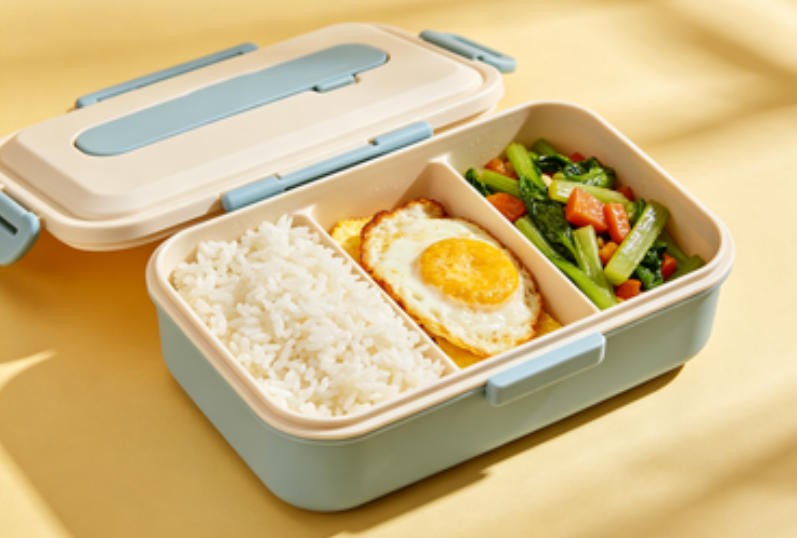
Scenario-based structural adaptability is the primary principle of mold design, closely aligned with the functional positioning and usage scenarios of the bento box. For basic plastic bento boxes, the core requirements are portability and basic sealing. The mold design adopts a single-cavity or multi-cavity integrated layout, optimizing the cavity curvature and edge snap-fit structure to achieve precise matching between the box body and the lid. This ensures the sealing performance after assembly while using a rational runner design to ensure uniform filling of raw materials during injection molding, avoiding deformation and cracking caused by uneven wall thickness. For multi-functional bento boxes used in scenarios like food delivery and outdoor carrying, which require compartmentalized storage and leak-proof shock resistance, the mold design focuses on modularization and integration. By designing quick-switch slider mechanisms and insert positioning structures, it enables one-shot forming of complex components such as multi-compartment partitions and independent sealing lids. This simplifies the subsequent assembly process and ensures the structural strength and sealing independence of each compartment, precisely addressing the pain points of different food storage needs.
Precision control is the soul of mold design, directly determining the sealing effect and user experience of the bento box. The sealing of a bento box relies on the precise fit between the box body and the lid. During mold design, a full-process precision control system is established, covering everything from the dimensional tolerance planning of cavities and cores, to the motion precision calibration of sliders and ejector pins, and the mating clearance design of positioning pins and grooves. Each step requires precise calculation and simulation verification. For example, for the sealing snap-fit parts of the bento box, the mold design must accurately control the elastic modulus, thickness, and mating angle of the snap-fit. It must ensure sufficient locking force to prevent lid opening and leakage during transportation, while avoiding assembly jamming or excessive wear due to dimensional deviations. For bento boxes made of heat-resistant materials, which have different forming shrinkage rates from ordinary plastics, the mold design needs to adjust the cavity shrinkage coefficient and cooling system layout accordingly to ensure precise dimensions after forming, meeting subsequent stacking and sealing requirements. This extreme pursuit of precision makes the mold a core barrier to guaranteeing the quality of bento boxes.
Safety compliance is the critical bottom line of mold design, strictly adhering to food safety standards and usage safety requirements. Since bento boxes directly contact food, mold design must eliminate safety risks at the source. It uses food-grade mold steel, and performs polishing and passivation treatments on the cavity surface to ensure no heavy metal precipitation or burr residue during forming. At the same time, it designs easy-to-clean runner structures and ejection mechanisms to avoid cross-contamination caused by raw material residue. For special products such as children's bento boxes and outdoor portable boxes, the mold design also needs to strengthen structural safety by optimizing edge curvatures to prevent scratches and designing anti-misoperation structures to prevent accidental leakage. This ensures that the mold design not only delivers basic functionality but also builds a safety defense line for use, meeting the safety needs of different consumer groups.
II. Mold Manufacturing: Quality Refinement and Precision Realization Based on Craftsmanship
Mold manufacturing is the core process of transforming design blueprints into physical equipment, and it is the key link to guaranteeing mold performance and bento box quality. It relies on rigorous process systems, advanced processing technologies, and strict quality control to translate design precision into actual forming capabilities. Every manufacturing step carries the core value and industrial responsibility of the mold.
Material selection is the fundamental prerequisite for mold manufacturing, requiring precise matching of mold steel according to the production scale, material characteristics, and forming process of the bento box. For small-batch, multi-style bento box production, pre-hardened plastic mold steel is used. This type of steel does not require subsequent heat treatment, has excellent machinability, and can quickly complete mold manufacturing to meet the flexible production needs of small batches. For large-batch, standardized bento box production, high-hardness, high-wear-resistant premium mold steel such as H13 and Cr12MoV is used. After forging, quenching, and tempering, this steel has excellent wear resistance, fatigue resistance, and dimensional stability, capable of withstanding long-term high-intensity injection molding operations to ensure the mold's service life and forming precision. Before material processing, the steel must undergo strict flaw detection and pre-treatment to eliminate internal defects such as pores and cracks, ensuring the steel quality meets mold manufacturing requirements and building a solid quality foundation from the source.
Precision machining is the core link of mold manufacturing, determining the dimensional accuracy and surface quality of the mold. Bento box molds have extremely high requirements for the dimensional accuracy and surface finish of cavities and cores, which must be achieved through advanced processing equipment and technologies. Currently, mold manufacturing widely adopts precision machining technologies such as CNC machining centers, electrical discharge machining (EDM), and wire electrical discharge machining (WEDM). Through digital programming control, the machining dimensional error is controlled at the micron level. For cavities and cores with complex structures, rough machining and semi-finishing are first completed by the CNC machining center to remove most of the allowance, followed by fine machining using EDM and WEDM to ensure the forming precision of complex surfaces and fine structures. At the same time, strict process control is implemented during mold manufacturing. After each process is completed, three-coordinate inspection is carried out to correct deviations in a timely manner, ensuring that the machining accuracy of each component is highly consistent with the design requirements, laying a precision foundation for the subsequent forming process.
Surface treatment and assembly debugging are the key final processes of mold manufacturing, directly affecting the durability and forming stability of the mold. In the surface treatment stage, differentiated treatment processes are adopted for different bento box molds. Technologies such as nitriding, hard chrome plating, and polishing are used to improve the wear resistance, corrosion resistance, and surface finish of the mold surface. This not only extends the mold's service life but also reduces the demolding resistance and surface defects of the bento box products, ensuring the flatness and cleanliness of the food contact surface. In the assembly and debugging stage, the processed mold components are accurately assembled, the smoothness of the ejection mechanism and slider mechanism is adjusted, and the operating parameters of the temperature control system and cooling water channels are calibrated. Through trial molding, injection pressure, temperature, time, and other process parameters are repeatedly adjusted until the bento box products are fully formed without flash or deformation, open and close smoothly, and seal properly, with all indicators meeting the design requirements. In this process, technical personnel must rely on rich experience and a rigorous attitude to control every detail, ensuring a seamless transition from mold manufacturing to production, and providing reliable guarantee for the large-scale production of bento boxes.
III. Mold Innovation: Technical Iteration and Value Empowerment Centered on Efficiency Improvement
The innovation of bento box molds has always revolved around improving efficiency and optimizing costs in the bento box industry. From structural optimization to process breakthroughs, from standardization upgrades to capacity enhancement, each technical innovation drives bento box production toward greater efficiency, stability, and competitiveness, becoming a core empowering force for industry upgrades.
Standardization and modularization are important directions of mold innovation, helping the bento box industry reduce costs and improve efficiency. As the production scale of bento boxes continues to expand, the pain points of long R&D cycles and high costs of traditional customized molds have become increasingly prominent. Mold enterprises are accelerating standardization and modular innovation by standardizing the core components of molds to form quickly replaceable universal modules. When bento box products need to be updated, only partial modules need to be replaced to adapt to new requirements, eliminating the need for new mold development, greatly shortening the R&D cycle, and reducing R&D costs. At the same time, modular design enables rapid assembly of multi-cavity molds, improving unit-time capacity to meet large-scale standardized production needs. This makes bento box production more flexible and economical, adapting to the production needs of enterprises of different scales.
Process breakthroughs and stability improvement are the core paths of mold innovation, ensuring stable quality output of bento boxes. Bento box production pursues stable quality output, and mold innovation focuses on optimizing forming processes and improving stability. By improving the mold cooling system and adopting multi-circuit circulating cooling technology, precise control of cavity temperature is achieved to avoid product deformation and sink marks caused by uneven temperature. Optimizing the injection runner design and adopting hot runner technology reduce raw material waste, improve forming efficiency, and ensure product surface finish and dimensional consistency. In addition, for bento boxes made of difficult materials such as high-toughness plastics and composite materials, mold enterprises develop specialized forming processes to solve problems like poor raw material fluidity and difficult demolding during forming, ensuring stable product quality. This frees bento box production from material limitations and expands the space for product innovation.
Capacity adaptation and flexible production are key goals of mold innovation, meeting diverse market demands. The bento box market demand is diverse and volatile, requiring both large-scale standardized production to meet daily needs and small-batch customized production to adapt to special scenarios. Mold innovation focuses on capacity adaptation and flexible production by designing quickly switchable mold structures to enable free conversion between single-cavity and multi-cavity molds. This meets the efficient production needs of large-volume orders while quickly responding to small-batch customized orders, improving production flexibility. At the same time, by optimizing the easy-to-maintain structure of the mold, downtime for maintenance is reduced, and equipment utilization is improved. This enables bento box production to flexibly respond to market demand changes and maintain a capacity advantage in fierce market competition.
As the core support of the bento box industry, each breakthrough in the design and manufacturing of bento box molds drives the quality upgrade and capacity iteration of bento box products. From precise design centered on scenario adaptation, to precision manufacturing based on craftsmanship, and then to innovation empowerment aimed at efficiency improvement, bento box molds have always resonated with the industry's development, building the industry foundation with technology and craftsmanship. In the future, with the continuous upgrade of consumer demand and the constant progress of manufacturing technology, bento box molds will continue to make breakthroughs around efficiency improvement, quality stability, and cost optimization. They will continuously inject innovative vitality into the bento box industry, help the food packaging industry achieve large-scale and quality-oriented development, and provide solid equipment guarantee for people's convenient dietary life.