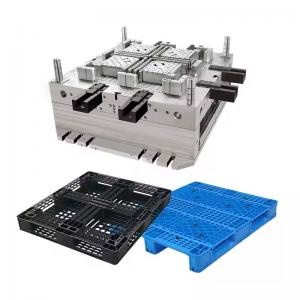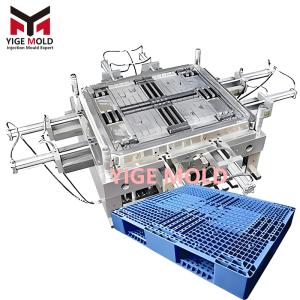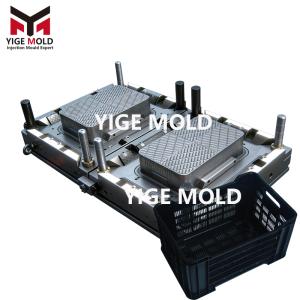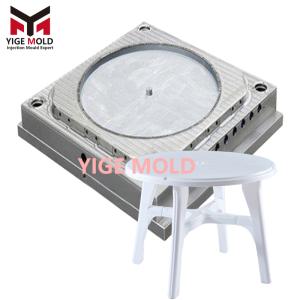
Plastic storage rack mold
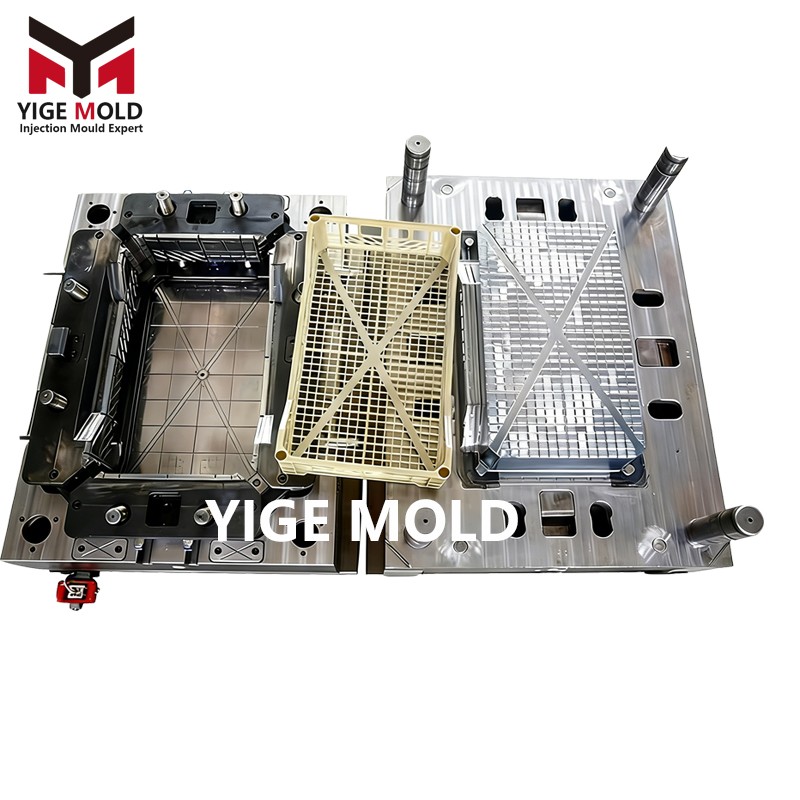
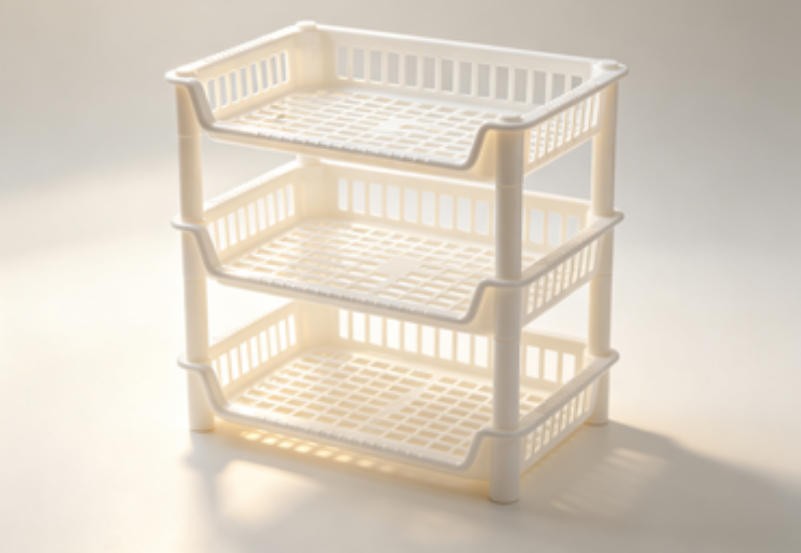
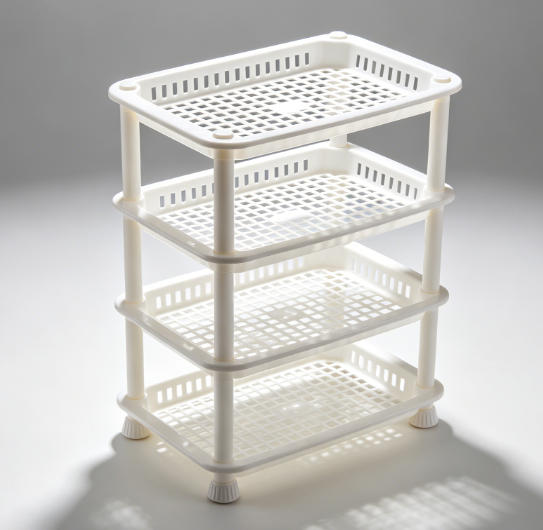 Introduction to Plastic Storage Rack Molds: Core Support for Industrial Upgrading Empowered by Design and Manufacturing
In the fields of home organization, commercial warehousing, and industrial storage, plastic storage racks have become a core carrier for space organization due to their advantages of being lightweight, durable, moisture-proof, mold-proof, and easy to clean. The plastic storage rack mold is the core engine driving the large-scale and standardized production of these products. It is not only the key molding equipment that transforms plastic raw materials into practical storage racks, but also directly determines the structural strength, dimensional accuracy, assembly adaptability, and appearance quality of the racks, profoundly influencing the entire process from the product's design blueprint to mass production. From multi-tier storage racks in home bedrooms to standardized units for supermarket shelves, and to heavy-duty storage systems in industrial workshops, the design and manufacturing capabilities of plastic storage rack molds have always been the core driving force behind the iterative upgrading of the storage rack industry, occupying an irreplaceable and key position in modern manufacturing.
I. Mold Design: Structural and Functional Innovation Guided by Demand
The design of plastic storage rack molds is a systematic project that integrates structural mechanics, material properties, molding processes, and usage requirements. Its core lies in scientific layout and precise planning, enabling the mold to both ensure molding efficiency and endow the storage racks with practical value and quality advantages. Every design detail is directly linked to the final product's performance and production efficiency.
Structural adaptability is the primary principle of mold design, which must closely align with the functional positioning and usage scenarios of the storage racks. For lightweight household plastic storage racks, the design focuses on lightweight construction and convenient assembly. The mold adopts a multi-cavity integrated layout and modular design to achieve one-shot molding of core components such as multi-tier frames and snap-fit connectors. This not only simplifies the subsequent assembly process but also ensures uniform filling of raw materials during injection molding through a rational runner layout, avoiding deformation and sink marks caused by uneven wall thickness. For industrial-grade heavy-duty storage racks, which need to bear hundreds of kilograms of weight, the mold design prioritizes structural strength and load-bearing stability. It uses high-strength mold steel to build the cavity, thickens the core structure of key load-bearing parts, and optimizes the design of stiffening rib formation to ensure the molded rack has sufficient pressure resistance and anti-deformation capabilities. Additionally, precise positioning pins and groove structures are designed in the mold to ensure the tightness of components after assembly, meeting the strict requirements for load-bearing and stability in industrial scenarios.
Precision control is the core soul of mold design, directly determining the dimensional compatibility and assembly smoothness of the storage racks. Plastic storage racks mostly adopt modular assembly, and the dimensional error of each component must be controlled within an extremely small range. Therefore, a full-process precision control system must be established during mold design. From the dimensional tolerance design of cavities and cores, to the motion precision planning of sliders and ejector pins, and to the layout precision of cooling water channels, every step requires precise calculation and simulation verification. For example, for the snap-fit connection parts of the storage rack, the mold design must precisely control the thickness, elastic angle, and mating clearance of the snap-fit, ensuring that the snap-fit has sufficient connection strength while avoiding assembly jamming or loosening due to dimensional deviations. For the splicing interfaces of large storage racks, the mold design needs to use high-precision positioning structures to ensure the flatness and fit of the interfaces, guaranteeing the overall stability of the assembled frame. This extreme pursuit of precision makes the mold a core barrier to ensuring the quality of storage racks.
The balance between demolding and molding efficiency is a key link in mold design, directly affecting the production cycle and cost. Plastic storage racks have diverse structures, and some products have complex features like grooves and snap-fits, making demolding difficult. Therefore, mold design must solve this problem through the optimization of scientific demolding mechanisms. Common designs include combined mechanisms such as ejector pin ejection, slider side core-pulling, and angled ejector demolding. Targeted demolding solutions are accurately matched for different structural components of the storage rack to avoid product deformation and damage caused by poor demolding. Meanwhile, to improve molding efficiency, the mold design adopts multi-cavity parallel molding technology. By optimizing the runner layout and temperature control system, simultaneous injection molding of multiple components is achieved, significantly shortening the single molding cycle. In addition, the mold design also incorporates the concept of easy maintenance, adopting a modular structural design to facilitate subsequent disassembly, cleaning, and repair, reducing downtime for maintenance and further improving production efficiency. This allows the mold to achieve efficient mass production while ensuring quality.
II. Mold Manufacturing: Quality and Precision Guarantee Based on Craftsmanship
Mold manufacturing is the core process of transforming design blueprints into physical equipment and is the key link to guaranteeing mold performance and storage rack quality. It relies on rigorous process systems, advanced processing technologies, and strict quality control to translate design precision into actual molding capabilities. Every manufacturing step carries the core value of the mold.
Material selection is the fundamental prerequisite for mold manufacturing, and mold steel must be accurately matched according to the production scale, product characteristics, and molding process of the storage racks. For small-batch production of lightweight storage racks, the mold uses pre-hardened plastic mold steel. This type of steel does not require subsequent heat treatment, has excellent machinability, and can quickly complete mold manufacturing to meet the flexible production needs of small batches. For large-batch production of heavy-duty storage racks, the mold uses high-hardness, high-wear-resistant premium mold steel, such as Cr12MoV and H13. After forging and heat treatment, this steel has excellent wear resistance, fatigue resistance, and dimensional stability, capable of withstanding long-term high-intensity injection molding operations and ensuring the mold's service life and molding precision. Before material processing, the steel must undergo strict flaw detection and pre-treatment to eliminate internal defects and ensure that the steel quality meets the requirements of mold manufacturing, building a solid foundation for mold quality from the source.
Precision machining is the core link of mold manufacturing, determining the dimensional accuracy and surface quality of the mold. Plastic storage rack molds have extremely high requirements for the dimensional accuracy of cavities and cores, which must be achieved through advanced processing equipment and technologies. Currently, mold manufacturing widely adopts precision machining technologies such as CNC machining centers, electrical discharge machining (EDM), and wire electrical discharge machining (WEDM). Through digital programming control, the machining dimensional error is controlled at the micron level. For cavities and cores with complex structures, the rough machining and semi-finishing are first completed by the CNC machining center to remove most of the allowance, followed by fine machining using EDM and WEDM to ensure the forming precision of complex surfaces and fine structures. Meanwhile, strict process control is implemented during mold manufacturing. After each process is completed, dimensional inspection is carried out to correct deviations in a timely manner, ensuring that the machining accuracy of each component is highly consistent with the design requirements, laying a precision foundation for the subsequent molding process.
Surface treatment and assembly debugging are the key final processes of mold manufacturing, directly affecting the durability and molding stability of the mold. In the surface treatment stage, differentiated treatment processes are adopted for storage rack molds with different requirements. Technologies such as nitriding, polishing, and hard chrome plating are used to improve the wear resistance, corrosion resistance, and surface finish of the mold. This not only extends the service life of the mold but also reduces the demolding resistance and surface defects of the storage rack products. In the assembly and debugging stage, the processed mold components are accurately assembled, the smoothness of the ejection mechanism and slider mechanism is adjusted, and the operating parameters of the temperature control system and cooling water channels are calibrated. Through trial molding, the injection pressure, temperature, time, and other process parameters are repeatedly adjusted until the molded storage rack products have precise dimensions, smooth surfaces, and easy demolding, with all indicators meeting the design requirements. In this process, technical personnel must rely on rich experience and a rigorous attitude to control every detail, ensuring a seamless transition from mold manufacturing to production, providing reliable guarantee for the large-scale production of storage racks.
III. Synergy between Design and Manufacturing: The Core Logic Driving the Upgrading of the Storage Rack Industry
The design and manufacturing of plastic storage rack molds are not isolated processes but an organic whole that supports each other and advances in coordination. The deep integration of the two not only guarantees the core performance of the mold but also drives the diversification and high-quality development of storage rack products, becoming the core driving force for industrial upgrading.
The two-way linkage between design and manufacturing achieves the iterative upgrading of technology and craftsmanship. During the mold design stage, the design team must fully consider the process feasibility of the manufacturing stage to avoid designing structures beyond the existing processing capabilities and ensure that the design scheme can be implemented. During the manufacturing stage, technical personnel provide timely feedback to the design team on design optimization spaces discovered during processing, driving continuous improvement of the design scheme. This two-way linkage enables continuous breakthroughs in mold technology, solving the problem of forming complex structures of storage racks and promoting the progress of manufacturing processes such as precision machining and intelligent assembly. It provides technical support for product innovation of storage racks, enabling more practical and innovative storage rack products to achieve large-scale production.
The collaborative optimization of design and manufacturing helps the storage rack industry reduce costs and increase efficiency. Through modular and standardized planning in the design stage, the process complexity and processing cycle of mold manufacturing are reduced. Through process innovation and quality control in the manufacturing stage, the scrap rate and maintenance cost of the mold are lowered. The collaboration between the two achieves cost control throughout the entire life cycle of the mold. Meanwhile, efficient mold design and manufacturing capabilities shorten the R&D cycle of storage rack products, enabling enterprises to quickly respond to market demands, launch storage rack products adapted to different scenarios, and enhance market competitiveness. This cost-reducing and efficiency-increasing synergistic effect not only makes plastic storage rack molds the core tool for enterprises' large-scale production but also drives the entire storage rack industry towards an efficient and intensive direction.
The design and manufacturing of plastic storage rack molds are a vivid microcosm of the precision and efficiency of modern manufacturing, carrying the quality foundation and development momentum of the storage rack industry. From scientific design guided by demand to precision manufacturing based on craftsmanship, the deep integration of the two not only makes the mold the core support for the molding of storage racks but also drives the continuous iterative upgrading of storage rack products to meet diversified storage needs. In the future, with the continuous advancement of manufacturing technology, the design and manufacturing of plastic storage rack molds will develop towards a more intelligent, precise, and efficient direction, continuously injecting innovative vitality into the storage rack industry, helping the storage field achieve more efficient and high-quality development, and providing solid equipment guarantee for modern life and industrial production.