Plastic clothespin mold
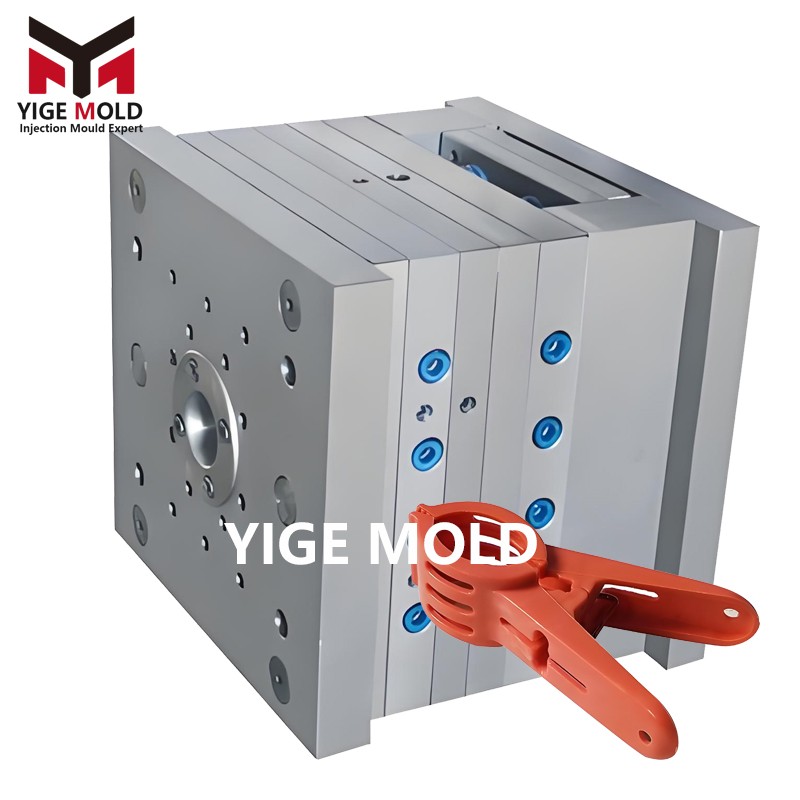
Comprehensive Technical Discourse on Plastic Clothespin Molds
Plastic clothespin molds belong to the category of molds for daily-use plastic products and are specialized tooling used for forming plastic clothespins. Their technological core lies in transforming thermoplastic materials such as Polyethylene (PE), Polypropylene (PP), and Acrylonitrile Butadiene Styrene (ABS) into functional, durable, and cost-controllable end-products with specific clamping functions via the injection molding process. The design and manufacturing of this type of mold profoundly embody modern industrial concepts of "replacing wood with plastic," "functional integration," and "mass manufacturing."
I. Correlation Between Mold Function and Product Characteristics
Although structurally simple, the functional requirements of a clothespin impose specific technical demands on the mold. The mold must accurately realize the following product features:
-
Functional Forming: Ensures the molded clamping arms have an appropriate lever ratio and contact surface curvature to generate uniform and stable clamping force. The clamping surfaces typically feature fine teeth or corrugations, which must be achieved through precise texturing or engraving processes on the mold cavity.
-
Achievement of Structural Reliability:
-
For disassembled structures (two arms + separate spring + pivot pin), the mold must guarantee dimensional symmetry of the two arms, concentricity of the pivot holes, and fit tolerances compatible with standard springs.
-
For integrated structures (with built-in elastic element), the mold must solve the fundamental challenge of forming and ejecting internal undercuts. This is typically accomplished using complex internal mechanisms such as angled lifters, collapsing cores, or rack-and-pinion systems, which force the elastic arm to deform and release during the ejection phase.
-
-
Appearance and Durability: The surface finish of the mold cavity (mirror polish, texture, etching, etc.) determines the product's aesthetic quality and release performance. Meanwhile, the selection of mold steel and its heat treatment directly impact the mold's wear life and corrosion resistance, thereby ensuring long-term dimensional stability of the product during high-volume production.
II. Mold System Architecture and Key Technical Modules
A complete clothespin mold is a precision system integrating multiple functional subsystems:
-
Molding System: Comprises the cavity and core of the front (fixed) and rear (moving) molds, which directly define the product geometry. For multi-cavity molds (commonly 1x24, 1x36, 1x48, etc.), balanced runner layout design is crucial to ensure simultaneous filling and equal pressure in all cavities.
-
Gating System: Depending on product structure and production efficiency, options include:
-
Three-plate cold runner mold: Suitable for pinpoint gates, allows automatic degating, but generates more runner waste.
-
Hot runner to cold runner system: Combines the material-saving advantage of hot runners with the flexibility of cold runners, making it a preferred solution for high-efficiency production.
-
-
Ejection and Return System: Given the irregular shape of clothespins, the ejection system requires careful design. Common methods include:
-
Ejector pin ejection: Pins are placed on non-appearance surfaces and ribs of the clamping arms.
-
Stripper plate ejection: Suitable for some structurally simple clips, provides stable ejection.
-
Air-assisted ejection: Used in specific complex areas to assist in preventing part deformation.
-
-
Side-Action Core Pulling System: This is the technical core of integrated clothespin molds. Its function is to first retract the cores that form the internal latch or elastic structure of the clamping arms after mold opening but before part ejection, creating space for the part's elastic deformation and release. This mechanism typically consists of angled leader pins, T-slots, sliders, wear plates, and limiters, requiring precise motion, wear resistance, and reliable self-locking.
-
Cooling System: As clothespins are often flat and elongated, uneven cooling easily causes warpage. Cooling channels must closely follow the cavity contour, employ multi-level, multi-circuit circulation, and may utilize conformal cooling channels (manufactured via 3D printing or special processes) to achieve optimal cooling efficiency and uniformity.
III. Essentials of Design and Manufacturing Workflow
-
Design Phase:
-
Part Analysis: Determination of parting line, draft angles, shrinkage rate (typically 1.6%-2.0% for PP).
-
Mold Flow Analysis: Using software like Moldflow to simulate plastic filling, packing, cooling, and warpage tendencies, optimizing gate location, size, and cooling layout to predict and resolve potential defects proactively.
-
Structural Design: Completion of the general assembly drawing and detailed drawings for all components, with a focus on verifying the stroke, angle, and mechanical strength of the side-action mechanisms.
-
-
Material Selection and Processing:
-
Mold Plate Materials: Commonly use pre-hardened steels like S50C, P20.
-
Molding Component Materials: Cavities, cores, sliders, lifters often use pre-hardened mirror polish steels or high-wear-resistant steels like 718H, S136, NAK80. For ultra-long life requirements, carbide or surface coatings (e.g., DLC, TiN) may be selected.
-
Precision Machining: Utilizing high-speed CNC milling for cavities, slow wire EDM (accuracy up to ±0.003mm) for precision inserts and sliders, and EDM for deep slots, fine details, and complex surfaces.
-
-
Assembly and Trial:
-
Performing precision fitting to ensure appropriate clearances and smooth operation of all moving components (e.g., sliders, lifters).
-
During the trial run, progressively adjusting injection parameters (temperature, pressure, speed, time) to verify part dimensions, functionality (clamping force test), and appearance, followed by final fine-tuning of the mold.
-
IV. Application Value and Industrial Impact
High-efficiency, long-life clothespin molds are the foundation supporting the vast global supply chain of daily-use plastic products. Advancements in their technology directly drive product evolution from low-end, single-function items to high-end, multi-functional ones (e.g., windproof, anti-slip, colorfast) and facilitate the transition towards automated and intelligent production modes. An excellent mold can produce tens of millions to hundreds of millions of parts over its lifespan, representing a classic case of "one-time investment, long-term return" in manufacturing.
Summary
The plastic clothespin mold is a comprehensive technological entity that integrates mechanical principles, materials science, flow analysis, and precision manufacturing. Its developmental history, from one perspective, reflects the evolution of the plastic mold industry from experience-driven to simulation-based science, from single components to system integration, and from merely fulfilling functions to pursuing ultimate efficiency and longevity. A deep understanding of its technological essence holds fundamental significance for technological innovation and industrial upgrading in related fields.