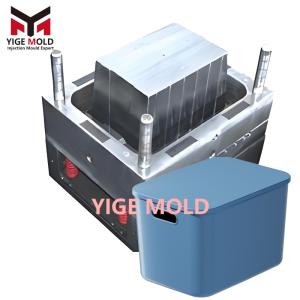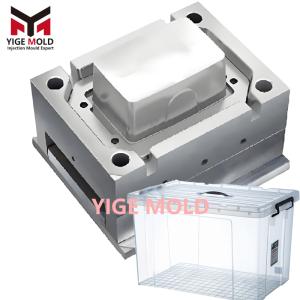
Plastic storage shelf mold
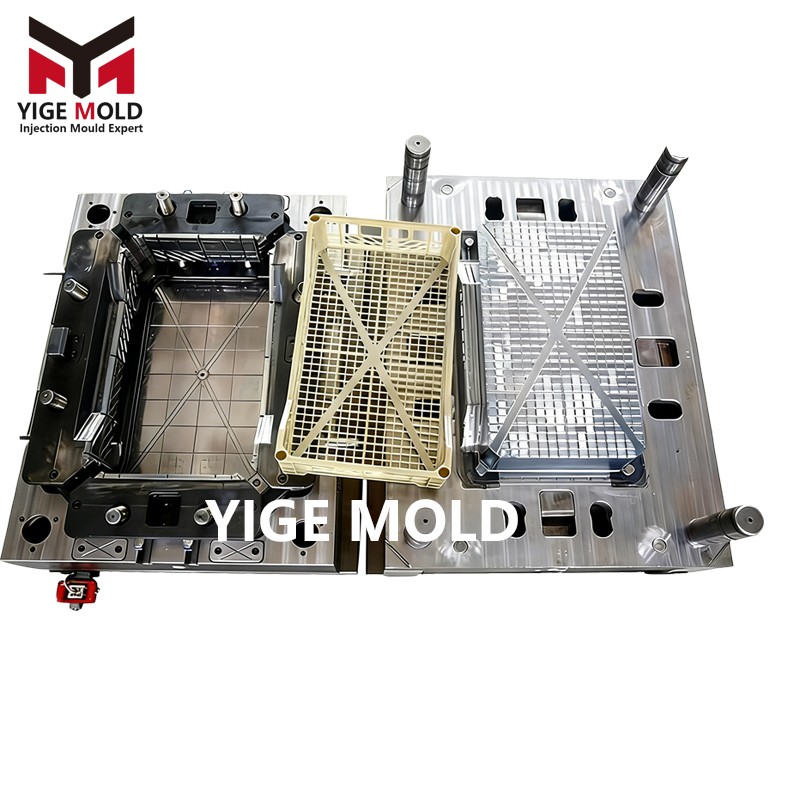
Detailed Engineering Description of Plastic Storage Shelf Molds
Plastic storage shelf molds are specialized injection molds designed for the mass production of plastic components for modular storage systems. These molds must produce components with precise mating dimensions, structural strength, and functional features—such as uprights, shelves, and connectors—in a single molding cycle, allowing for standardized assembly into load-bearing structures. Their design and manufacturing must address technical challenges including dimensional chain matching for multiple components, filling of deep, thin-walled cavities, and complex ejection.
I. Product Structure and Key Mold Design Considerations
-
Component Structure and Molding Difficulties
-
Uprights: Often hollow structures with multiple longitudinal T-slot or C-channel tracks for shelf height adjustment. The mold must employ multi-slider side-core pulling mechanisms to form the internal tracks and address issues of uniform filling and controlled shrinkage in long, deep cavities. The motion accuracy and rigidity of the core-pulling sliders are critical to ensure stable track dimensions for smooth shelf bracket movement.
-
Shelves: Typically large-area panels with reinforcing ribs, thickness ranging from 2.5-4mm. The core of mold design is ensuring flatness and preventing warpage caused by uneven shrinkage. This is achieved through multi-point balanced gating (e.g., film gates or arrays of submarine gates) and a cooling system with zonal temperature control. The roots of the ribs require sufficient cooling to prevent sink marks, but their narrow channels pose difficulties for machining and polishing.
-
Connectors and Latches: Such as three-way/four-way connectors and quick-lock latches, these have complex structures often containing multiple undercuts. The mold requires angled lifters, collapsing cores, or unscrewing mechanisms. For latches with spring arms, the mold must precisely control the wall thickness and ejection sequence of the forming area to guarantee the snap-fit force and durability.
-
-
Ensuring Fit Accuracy and Interchangeability
-
Mold design must accurately calculate and compensate for differing shrinkage rates between components. For example, glass-fiber reinforced materials shrink significantly less than standard PP. If uprights and connectors use different materials, their mating dimensions must be specifically adjusted during the mold design phase.
-
Tolerances for the mold cavities of all mating features, such as latch protrusions and recesses or upright socket holes, typically need to be controlled within ±0.05mm, with excellent surface finish to ensure smooth assembly and a secure connection.
-
II. Design of Core Mold Systems
-
Gating System
-
For long uprights, a hot runner with edge gates at one or both ends is typically used to ensure steady melt advancement along the length, minimizing weld lines and flow resistance. For large shelves, a layout of multiple hot-to-cold runner transitions with fan gates or pin-point gates may be used for rapid, balanced filling.
-
Gate locations must be chosen carefully to avoid prominent weld lines in stress-bearing or visible areas.
-
-
Cooling System
-
This is key to controlling product quality and production efficiency. As shelf components are often thin-walled or contain dense ribs, cooling must be efficient and uniform.
-
A complex network of cooling channels is arranged within the mold. In thick sections (like rib intersections, upright corners), channel density is increased, or turbulent cooling methods like baffled bubblers or baffle plates are used to accelerate heat removal.
-
Cooling channels should be as close to the cavity surface as safely possible. For deep upright cavities, spiral cooling channels or inserts made of high thermal conductivity material (like beryllium copper alloy) are often designed inside the core.
-
-
Ejection System
-
The system is complex and requires substantial ejection force. For large shelves, dozens to hundreds of ejector pins are uniformly distributed, placed under ribs or on non-visible surfaces to prevent "ejector pin blush."
-
For parts with deep cavities or undercuts (e.g., connector housings, end caps with latches), pneumatic ejection assistance is used. Towards the end of the mechanical ejection stroke, compressed air is blown between the core and the part to aid release, especially beneficial for deep-cavity parts made of softer materials (like PP).
-
For parts with side latches or recesses, angled lifter mechanisms are a common choice, as they can perform lateral core retraction during the ejection motion.
-
-
Side-Action Core Pulling System
-
This is essential for molding the functional features of shelves (e.g., tracks, slots, vent holes). The mold may contain multiple sliders driven by angled leader pins, dog-leg pins, or hydraulic cylinders.
-
Design requires precise calculation of the slider's travel distance and locking force to prevent movement under high injection pressure, ensuring part dimensional accuracy and avoiding flash.
-
III. Manufacturing Processes and Quality Control
-
Material Selection
-
Mold Base: Uses high-strength pre-hardened steel (e.g., S50C, P20) to ensure stability under long-term, high-tonnage clamping force.
-
Molding Components: Cavities, cores, sliders, lifters, etc., mostly use high-wear-resistant, high-polishability mold steels like S136, 718H, NAK80. For areas requiring mirror finishes or high life expectancy, higher-grade steels or surface treatments may be selected.
-
-
Precision Machining
-
CNC Machining: Used for machining large core/cavity inserts and complex 3D surfaces. High-speed milling improves efficiency and surface quality.
-
Electrical Discharge Machining (EDM): Used for details like internal corners, deep slots, narrow gaps, and text/logo engraving in areas difficult for CNC tools.
-
Slow Wire EDM: Used for high-precision machining of slider and lifter mating surfaces and precision inserts, ensuring the fit accuracy and smooth movement of components.
-
Deep Hole Drilling: Used for machining long, deep cooling water channels.
-
-
Heat Treatment and Surface Treatment
-
Core molding components typically undergo hardening and tempering to achieve sufficient hardness and toughness.
-
Moving parts (e.g., slider guides) can undergo surface treatments like nitriding to improve wear resistance.
-
Cavity surfaces are finished according to product requirements—polished (mirror, satin) or textured (leather grain, fine sparkle, etc.).
-
-
Assembly and Debugging
-
All machined parts and standard components (guide pillars, ejector pins, cooling connectors, etc.) are assembled with precision. Emphasis is on adjusting the fit clearance of all moving parts to ensure no sticking or looseness.
-
The mold is trialed on an injection molding machine. Process parameters (temperature, pressure, speed, time, etc.) are adjusted to optimize part appearance and quality, resolving potential issues like flash, sink marks, warpage, and short shots. It is particularly important to verify that components assemble together smoothly and meet load-bearing requirements.
-
IV. Production Considerations and Mold Maintenance
-
Production Efficiency: Efficiency is improved by using hot runners, optimizing cooling, and employing multi-cavity designs (e.g., one mold producing multiple connectors) to shorten the cycle time and increase output.
-
Mold Life: With proper use and maintenance, a high-quality shelf mold can have a lifespan exceeding one million cycles. Regular maintenance—such as cleaning water lines, lubricating moving parts, and checking for wear—is crucial for extending mold life.
-
Cost Control: While ensuring quality and lifespan, mold manufacturing costs are optimized through rational structural design, material selection, and processing methods.
Conclusion
Plastic storage shelf molds are complex equipment that integrates knowledge of precision mechanical design, materials engineering, and injection molding processes. Their success directly determines the functionality, aesthetics, ease of assembly, and service life of the final shelf product. Excellent design and manufacturing not only enable efficient and stable production but also, through precise dimensional control and structural optimization, deliver durable, high-performance storage solutions with a good user experience. The technical level of such molds is a key indicator of the plastic product manufacturing industry's capability in the field of structural and functional products.