Preform Injection Mold
 Preform Injection Mold: The Precision Origin of Modern Bottling Industry
The preform injection mold is a highly technology-intensive core equipment in the modern plastic packaging industry, serving as the critical technical bridge connecting raw material pellets to the final plastic container. As the first step in the two-stage blow molding process, it bears the crucial responsibility of precisely shaping molten plastic into "preforms." Its design, manufacturing, and process level directly determine the final bottle's appearance quality, mechanical strength, barrier properties, and cost efficiency.
I. Core Definition and Strategic Position
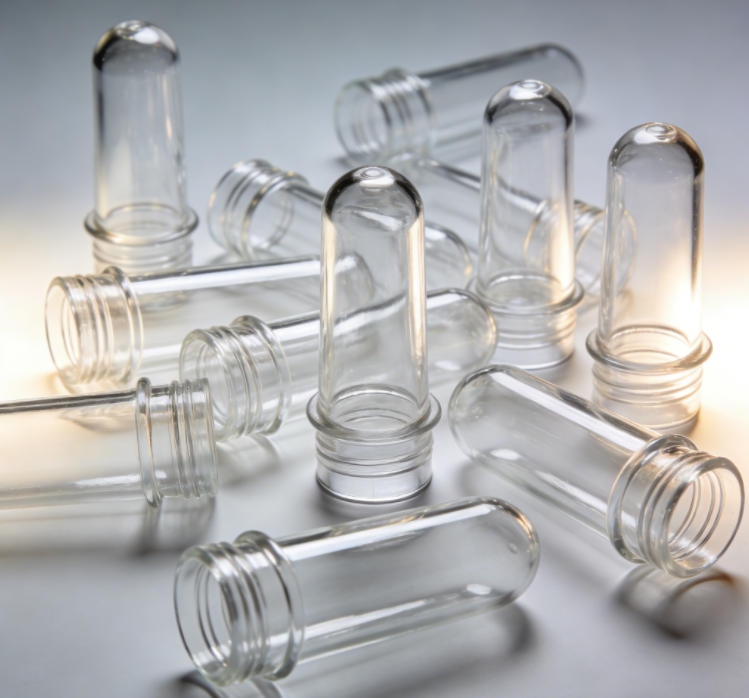
The Preform Injection Mold is a specialized mold used for the mass production of plastic preforms with high precision via the injection molding process. A preform, also known as a "parison," is a semi-finished product shaped like a thick-walled test tube with a complete threaded neck finish on one end. Its importance lies in:
-
Functional Determinant: The preform's weight distribution, wall thickness design, molecular orientation, and crystallinity are predetermined during the injection stage, fundamentally dictating the physical and chemical properties of the blown bottle.
-
Core of Efficiency and Cost: The mold's cavity count, hot runner efficiency, and cooling speed determine the production cost per preform, making it a key factor influencing the economics of the entire packaging chain.
-
Quality Origin Point: The precision of neck finish dimensions, integrity of threads, and absence of defects in the preform body are the foundation for ensuring bottle seal integrity, smooth filling line operation, and consumer safety.
II. System Composition and Technical Deconstruction
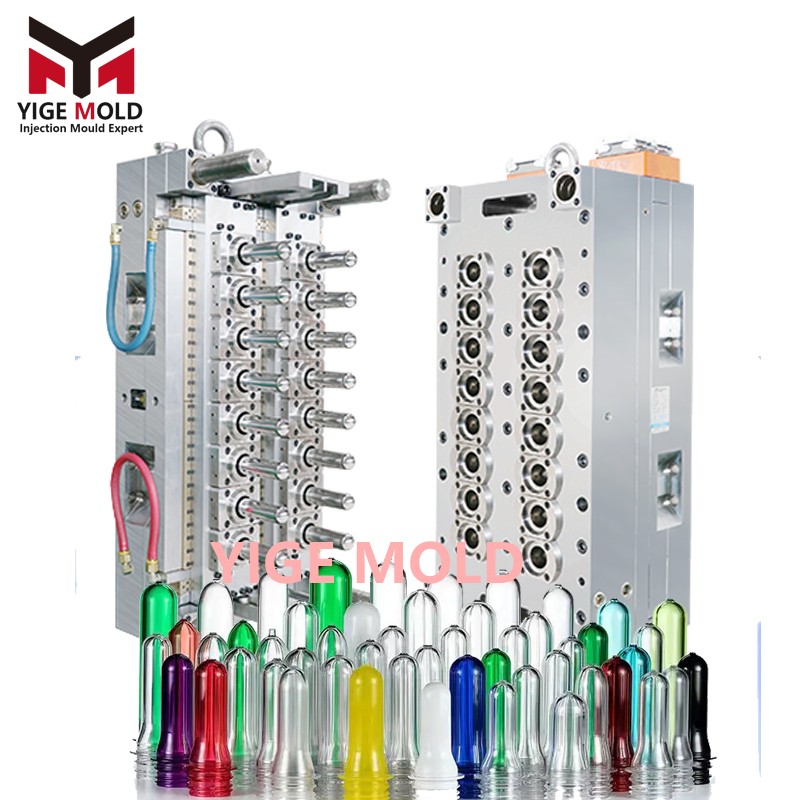
An advanced preform injection mold is a precision-engineered entity highly integrated with multiple subsystems.
-
Molding System
This is the heart of the mold, primarily consisting of cavities and cores that precisely replicate the preform's internal and external contours.
-
Cavity: Forms the preform's external surface, determining critical outer dimensions such as neck threads, support ledges, and body diameter. Its machining precision must reach the micron level.
-
Core: Forms the preform's internal surface. Its shape and taper directly influence the wall thickness distribution of the preform. The design must incorporate reverse compensation based on blow-molding deformation to ensure uniform wall thickness after blowing. Cores typically integrate high-efficiency cooling channels internally to accelerate preform cooling and shorten the cycle time.
-
-
Hot Runner System
The soul of a preform mold, completely eliminating cold runners.
-
Structure: Comprises a main manifold and valve-gated hot nozzles. The number of nozzles strictly corresponds to the number of cavities, with each nozzle independently temperature-controlled.
-
Core Technology – Valve Gate Sequential Control: The opening and closing sequence of each nozzle's valve pin is precisely controlled via hydraulic or pneumatic means. The purpose is to ensure the melt, after traveling through runners of varying lengths, fills all cavities simultaneously, with equal pressure and temperature. This is the only method to guarantee weight variation among hundreds of preforms is less than 0.1 grams. Advanced systems also enable multi-stage injection to optimize molecular orientation.
-
-
Temperature Control System
Preform quality is extremely sensitive to temperature, so the mold's thermal management system is divided into two parts:
-
Heating System: Precisely controls the temperature of various parts of the hot runner system (often zoned), ensuring stable melt flow.
-
Cooling System: Provides efficient cooling for cavities and cores. Cavities often use laminar flow cooling channels, while cores commonly employ spiral channels or bubble tube cooling. Cooling uniformity determines the preform's crystallinity and transparency, while cooling efficiency directly dictates the production cadence.
-
-
Neck Finish and Bottom Mold System
This represents the pinnacle of precision in preform molds.
-
Neck Insert: Made from ultra-hard, highly wear-resistant specialty steels (e.g., tungsten carbide alloys), it forms the threads, tamper-evident bands, and sealing surfaces compliant with international standards (e.g., PCO 1810, 1881) through mirror polishing and precision grinding. Its required service life is extremely high, often exceeding 20 million injection cycles.
-
Bottom Mold System: Forms the preform's pre-designed bottle bottom. Modern molds often feature mechanically or hydraulically actuated bottom molds that assist in ejection and ensure the preform base is deformation-free.
-
-
Ejection and Guidance System
After molding, the preform is smoothly pushed off the core by ejector pins or sleeves. To ensure precise alignment of mold halves during high-speed operation, high-precision leader pins/bushings and return mechanisms are employed.
III. Key Technical Requirements and Manufacturing Challenges
-
High Cavitation and Balance: To pursue ultimate efficiency, cavity counts have evolved from early 48 to mainstream 96, 128, and even 144 cavities. Designing for runner balance, thermal balance, and cooling balance becomes immensely complex; any minor imbalance can render some preforms non-compliant.
-
Ultra-Long Service Life and Wear Resistance: Neck inserts and cavities operate under high frequency and pressure, enduring significant mechanical wear and chemical corrosion. Surface treatment technologies like PVD (Physical Vapor Deposition) coatings (e.g., CrN, TiAlN) are widely applied to enhance hardness and release properties.
-
Extreme Cooling Efficiency: Preform cycle times are often measured in seconds (as low as 8-10 seconds), with over 60% dedicated to cooling. The combined use of conformal cooling, pinpoint cooling, and beryllium copper inserts aims to minimize cooling time to the extreme.
-
Cleanability and Low Maintenance: Mold design must avoid dead spots where material can stagnate, and runner surfaces require high polish. Sealing designs must be reliable to prevent cooling water leaks from contaminating the production environment.
IV. Differentiated Requirements Across Application Fields
-
Carbonated Beverages: Preforms must withstand internal pressure (typically ≥1.6 MPa). Design emphasizes uniform material distribution and high strength in the base and body, with neck finishes preventing gas leakage.
-
Water: Focus on lightweighting, with preform weights continuously decreasing (e.g., a 500ml preform reduced from ~24g to under 18g). Molds must ensure complete filling and adequate strength at extremely thin walls, posing extreme challenges to hot runner and cooling systems.
-
Hot-Fill Beverages: For tea, juice, etc., preforms must withstand filling temperatures of 85°C-95°C. Mold design must promote higher heat-induced crystallinity in the preform to resist deformation during subsequent heating.
-
Premium Cosmetics/Pharmaceuticals: Demand extremely high clarity, purity, and freedom from defects. Mold steels require corrosion-resistant mirror polish grades, water lines must use stainless steel tubing to prevent rust contamination, and the environment must meet cleanroom standards.
The preform injection mold, a "chip"-level equipment at the upstream end of the packaging industry chain, encompasses far greater technological depth than a simple shaping tool. It is the crystallization of materials science, fluid dynamics, thermodynamics, precision mechanics, and automation control. Every breakthrough in lightweighting, every application of a new material, every launch of a new bottle design originates from the ingenious conception of mold designers and the masterful craftsmanship of mold makers. In today's global pursuit of a circular economy and green packaging, innovation in preform injection molds is fundamentally propelling the entire beverage and packaging industry toward a more efficient, environmentally friendly, and intelligent future. It not only shapes the physical form of the bottle but also, intangibly, shapes the form and rhythm of modern consumer life.