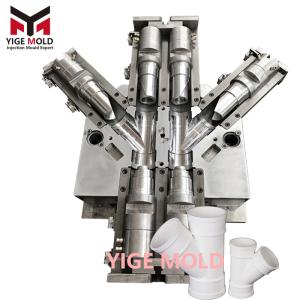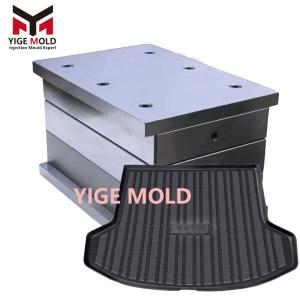
Road stud mold
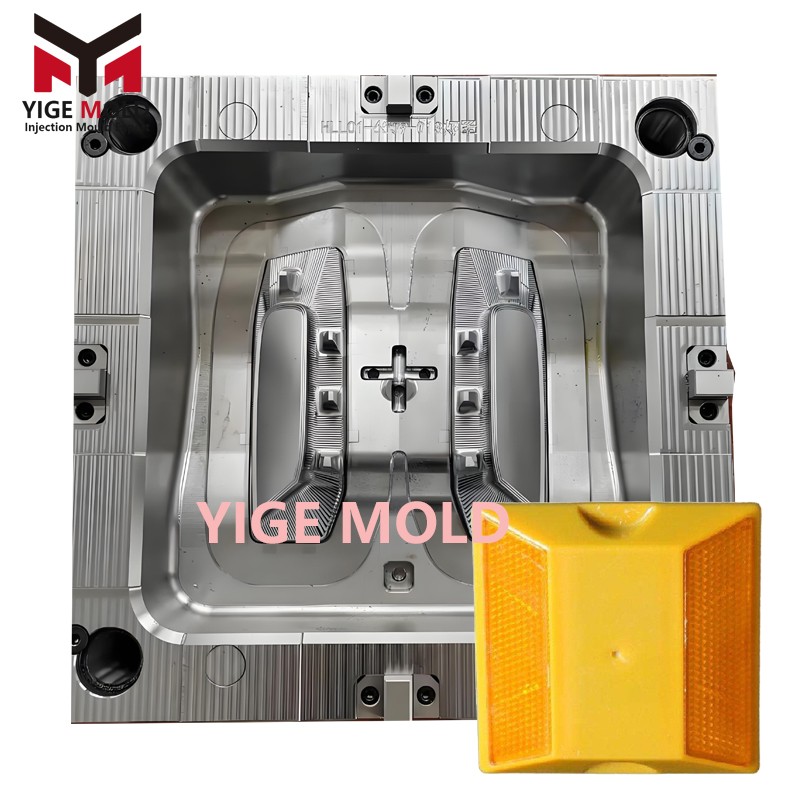
Road Reflective Stud Injection Molds: The Cornerstone of Precision Molding and Traffic Safety
In the modern traffic engineering system, road reflective studs, serving as the "eyes of the road," play a critical role in guiding vision and warning of lane boundaries at night. The unsung hero supporting the mass production of these key safety components with high quality is the road stud injection mold. As a piece of precision industrial equipment, the injection mold not only determines the physical strength, optical performance, and weather resistance of the stud but is also directly linked to the safety factor of road traffic. Unlike traditional metal die-casting or simple cold-pressing processes, injection molds transform thermoplastic materials into structurally complex engineering products through high temperature and high pressure. Its technical connotation encompasses a deep intersection of fluid dynamics, thermodynamics, and precision mechanical design.
Specificity and Complexity of Mold Structure
Although road studs are small in volume, the design difficulty of their injection molds is significant. A standard road stud typically consists of a housing, a reflective lens (or beads), a base, and internal reinforcing ribs. This requires the mold to possess an extremely high capability for multi-component insert molding. During the design phase, mold engineers must precisely calculate the positioning tolerances of the reflective components to ensure that during the injection process, the molten plastic tightly encapsulates the reflective lens or pre-embedded metal parts. At the same time, the injection pressure must not cause displacement or deformation of the lens; otherwise, optical performance failure will occur directly.
Molds usually adopt a multi-cavity layout to improve production efficiency, with "4-cavity" or "8-cavity" layouts being common. To ensure filling consistency across all cavities, the runner system design must follow strict balance principles. The locations of the main runner, sub-runner, and gate require Computer-Aided Engineering (CAE) simulation analysis to ensure that the plastic melt reaches the end of each cavity simultaneously, avoiding defects like "short shots" or "flash." Furthermore, considering that studs need to withstand repeated tire rolling and impact, the interior of the mold cavity often features complex slider and lifter mechanisms to form undercut structures on the bottom or side buckles of the stud. This makes the internal mechanical structure of the mold exceptionally compact and precise.
Matching Material Characteristics with Mold Steel
Road studs are exposed outdoors for long periods and must withstand harsh environmental tests such as UV radiation, acid rain corrosion, extreme temperature alternations, and vehicle impact. Therefore, the materials selected for road stud injection molds must possess extremely high wear resistance, corrosion resistance, and polishing performance. Typically, the core components (cores and cavities) are made of high-quality stainless steel, such as S136 or the 420 series. After vacuum heat treatment, these steels can reach a hardness of HRC 48-52. This not only resists the scouring wear from abrasive materials like glass-fiber-reinforced nylon during high-speed injection but also ensures the mold does not rust during long-term use, maintaining the surface finish of the product.
In the injection process, common materials for studs include Polycarbonate (PC), modified Polypropylene (PP), or ABS engineering plastics. These materials often have added glass fibers to enhance strength, but this also increases the risk of mold wear. Consequently, mold surfaces often undergo nitriding or PVD coating treatments to further reduce the friction coefficient, prevent plastic sticking, and extend the mold's service life. This extreme application of materials science allows a high-quality stud mold to stably produce hundreds of thousands of cycles without loss of precision.
Cooling Systems and Optimization of Molding Cycles
The efficiency of injection molding largely depends on the cooling speed. As a product with thick or variable wall thickness, if a stud cools unevenly, it is extremely prone to sink marks, air bubbles, or internal stress, leading to cracking after installation. To this end, conformal cooling water channels are designed inside the road stud injection mold. Unlike traditional straight-drilled water channels, conformal channels wind and arrange closely along the contour of the cavity surface, ensuring uniform mold temperature at every point.
Through precise control by a mold temperature controller, the mold can rapidly cool the product to the ejection temperature after injection is complete. This efficient heat exchange capability not only shortens the molding cycle and increases capacity but, more importantly, ensures uniform crystallinity inside the stud, thereby endowing the product with excellent mechanical strength and dimensional stability. For double-sided reflective studs, the mold must also consider differential temperature control between the upper and lower molds to prevent warping deformation caused by different shrinkage rates.
Venting Systems and Appearance Quality Control
During the high-pressure injection process, if the air in the cavity cannot be exhausted in time, it will be compressed to generate high heat, causing defects like burns, flow marks, or incomplete filling on the product surface. For stud housings requiring a mirror finish, any microscopic bubble is fatal. Therefore, high-precision road stud injection molds incorporate micron-level venting slots at the parting surface, ejector pin fits, and insert gaps.
Some high-end molds also utilize porous steel inserts, using the micro-porous structure of the steel itself to vent gas while blocking the plastic melt. This meticulous venting design, combined with the mirror polishing process of the mold cavity (typically reaching SPI A1 grade), ensures that the produced stud surface is as smooth as a mirror. This is not only aesthetically pleasing but also reduces the adhesion of rainwater and dust, maintaining the long-term reflective efficiency of the stud.
Precision Design of Ejection Mechanisms
Stud demolding is the final step of the injection cycle and also the stage most prone to product damage. Since studs often feature undercut structures like anti-slip teeth or mounting holes, the mold must be equipped with a precise ejection system. This usually includes a combination of ejector pins, blade ejectors, sleeves, and air poppets.
During design, engineers need to precisely calculate the distribution of ejection force to ensure the product is subjected to uniform force at the moment of demolding, preventing stress whitening or deformation. For automated production lines, the mold must coordinate with robotic arms, designing delayed ejection or double-ejection mechanisms to ensure the product completely separates from the core before being grasped by the robot. This extreme attention to detail ensures that every offline stud perfectly fits road installation standards.
Conclusion
In summary, the road reflective stud injection mold is by no means a simple metal groove but a high-tech product integrating precision machining, materials science, and rheology. From precise 3D data reverse engineering to the balanced layout of hot runner systems; from the thermal optimization of conformal cooling channels to the fine polishing of micron-level venting slots, every step embodies the wisdom of the manufacturer. It is these molds, meticulously carved in steel, that transform ordinary plastic granules into sturdy guardians of traffic safety, silently protecting the smooth flow and safety of roads for countless days and nights.