Disposable Meal Box Mold
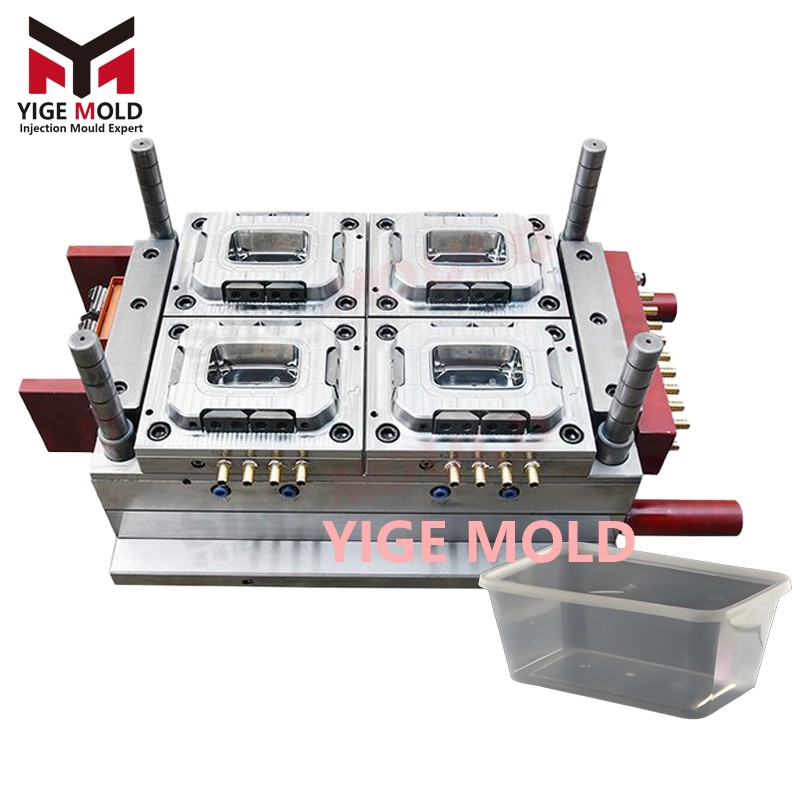
Disposable Meal Box Mold: The Precision Foundation Supporting Modern Life
Preface: The Industrial Crystallization Behind Everyday Items
In today's fast-paced society, disposable meal boxes carry the daily dining needs of countless people, becoming an indispensable part of urban life. Behind these seemingly simple containers lies a complete system of precise and rigorous industrial manufacturing. The meal box mold is the core and starting point of this system. It is not merely a tool that gives plastic its specific form but is also the key determinant of the functionality, economy, and suitability of the meal box. This article will systematically analyze the specialized field of disposable meal box molds from the perspectives of technical essence, process core, and industrial value.
I. Technical Core: The Realization of Precision Engineering
1. Function-Oriented Structural Design
The primary goal in designing a modern disposable meal box mold is to accurately realize the intended functions of the meal box. Designers must translate every usage requirement of the final product into specific structural features within the mold.
Sealing System: The leak-proof quality of a meal box relies on the precise interlocking structure between the lid and the body. The mold must form uniform, continuous sealing ribs and clasps, with dimensional tolerances often controlled within 0.05 millimeters, ensuring smooth opening and closing as well as reliable sealing.
Structural Reinforcement: To ensure sufficient strength while reducing material usage, a complex network of reinforcing ribs is designed into the mold. The width, height, and arrangement of these ribs are calculated to effectively distribute stress when bearing the weight of soups or external pressure, preventing deformation of the meal box.
User-Friendly Design: Details such as the smooth finishing of the meal box rim, anti-slip structures for easy handling, and recessed grooves for easy opening all require precise forming on the mold. The realization of these designs, which enhance the user experience, depends entirely on the shape and surface treatment of the corresponding parts of the mold.
2. Process Considerations for Diverse Materials
Meal boxes made from different materials impose different requirements on the mold. The design and manufacturing of the mold must be deeply aligned with the characteristics of the target material.
Traditional Polypropylene (PP): The most commonly used material, with good flow properties and relatively stable shrinkage. Molds designed for PP focus on production efficiency, with gating systems aimed at filling the cavity quickly and evenly.
Polystyrene (PS): Often used for meal boxes requiring good transparency, but the material is relatively brittle. Corresponding molds pay special attention to avoiding sharp stress concentration points, and draft angles need to be increased to prevent cracking during ejection.
Bio-based Materials (e.g., PLA): Increasingly popular due to environmental trends. These materials are typically more sensitive to temperature, and their cooling and solidification behavior differs from traditional plastics. Molds designed for such materials require more careful layout of the cooling system to ensure the product cools evenly and gently, minimizing deformation.
II. Manufacturing Core: The Transformation from Steel to a Precision Tool
1. Steel: The Skeleton and Skin of the Mold
The quality of a mold begins with a premium steel block. Meal box molds primarily use pre-hardened plastic mold steel, which has been heat-treated before leaving the factory to possess sufficient hardness (typically between HRC 30-40) to resist wear from long-term production while maintaining good machinability.
Cavity Components: The parts that directly form the appearance of the meal box are made from high-grade steel with excellent polishability. After fine polishing by hand or with diamond paste, a mirror finish can be achieved, resulting in a glossy meal box surface that is easy to demold.
Moving Components: Such as sliders and lifters, used to form complex structures like clasps and undercuts. These parts require tougher steel and often undergo surface treatments like nitriding to enhance wear resistance, ensuring they maintain precision even after hundreds of thousands of cycles.
2. Machining: The Birth of Precision
Mold manufacturing is an art of accumulating precision. A single meal box mold comprises hundreds of components, each requiring multiple precision machining steps.
Cavity Machining: The shape of the meal box is carved into the steel block using CNC milling machines. This is the most critical step determining the meal box's dimensions and appearance, with precision requirements reaching ±0.01 mm. Complex curved surfaces and ribs require engineers to meticulously program tool paths and select suitable ball-nose end mills to achieve smooth surfaces.
Electrode and EDM (Electrical Discharge Machining): For deep grooves, narrow ribs, or sharp corners that are difficult for milling cutters to reach, EDM is employed. First, a "electrode" complementary to the target shape is made from copper or graphite. Then, using an EDM machine, the desired shape is precisely "etched" into the steel via electrical discharge erosion. This process may require multiple electrodes, moving from rough to fine finishing.
Assembly and Debugging: Precisely assembling the hundreds of machined parts like a puzzle is the final hurdle to a successful mold. Assembly technicians rely on extensive experience to ensure all moving parts operate smoothly without sticking and that parting surfaces meet tightly without flash gaps. This is followed by trial molding—adjusting hundreds of parameters on the injection molding machine, such as temperature, pressure, and speed, to find the "sweet spot" for consistently producing perfect meal boxes. This process may be repeated several times until all issues are resolved.
III. The Industry Anchor: The Role of Molds in the Supply Chain
1. The Amplifier of Efficiency and Cost
In the mass production of meal boxes, the mold is the core determinant of production efficiency and per-unit cost. An excellent mold should possess:
-
Long Service Life: Capable of stably producing millions of meal boxes under normal maintenance, minimizing the amortized cost of the mold.
-
Fast Cycle Time: An optimized cooling system reduces the solidification time of the meal box inside the mold, thereby increasing the number of pieces produced per minute.
-
Low Rejection Rate: Stable mold performance is the foundation for consistent product quality, maximizing the reduction of raw material waste.
2. The Source of Innovation and Differentiation
Any innovation in meal box products—whether a new aesthetic design, a more convenient opening method, or an improved structure for microwave suitability—must first be realized in the mold. Close collaboration between mold manufacturers, meal box brands, and plastic product factories is the bridge that transforms market ideas into physical products. For example, the key to the popular "leak-proof soup" meal boxes in recent years lies in the precise and reliable internal sealing ring formed by the mold.
IV. The Foundation of Quality: Precision, Durability, and Stability
1. The Precision Management System
Precision management runs through the entire lifecycle of the mold. From every dimension on the design drawings, to repeated verification with coordinate measuring machines in the machining workshop, to full-dimensional inspection of the first article samples during trial molding, the awareness of precision permeates every step. For a qualified mold, the difference in key dimensions between the 1st and the 1,000,000th meal box produced should be negligible.
2. The Culture of Maintenance and Care
A mold is not a "disposable" tool but an asset requiring meticulous care. Establishing standardized maintenance procedures is crucial: the cavity must be thoroughly cleaned after each production run to prevent carbonization of plastic residue; moving parts require regular lubrication and wear inspection; anti-rust oil must be applied before long-term storage. Professional maintenance can extend mold life several times over, protecting the return on investment.
Conclusion: The Silent Pillar of Industry
The disposable meal box mold, as a highly specialized niche in the modern industrial system, holds value far beyond its steel frame. It is the convergence point of materials science, mechanical design, precision machining, and practical needs, silently shaping our daily lives with millimeter or even micron-level precision. Every securely sealed meal box, every safely contained takeaway meal is supported by this precise system in the background.
As global requirements for food safety, convenience of use, and environmental performance continue to rise, the meal box mold industry also constantly faces new challenges and opportunities. In the future, it will continue to evolve towards greater precision, higher efficiency, and better adaptation to new materials, providing a solid and indispensable foundation for the smooth operation of modern society from an unassuming corner. This is the profundity of industrial civilization: transforming ultimate engineering complexity into the simple, reliable objects of everyday life.