Fruit Vegetable Plastic Basket Injection Mold
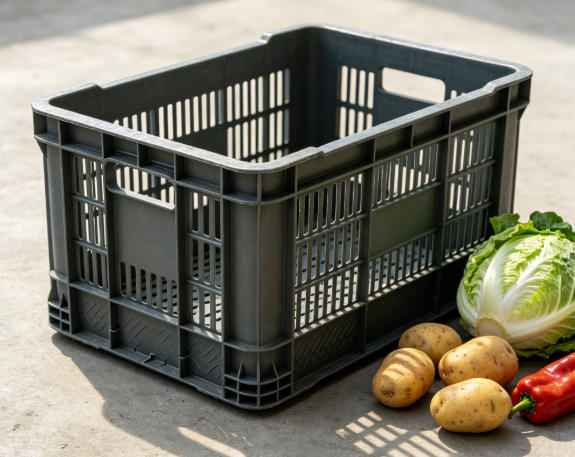 Introduction to Injection Molds for Fruit and Vegetable Plastic Crates
I. Overview of Injection Molds for Fruit and Vegetable Plastic Crates
1.1 Definition and Purpose of the Mold
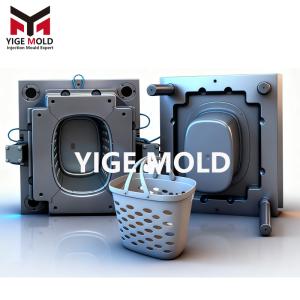
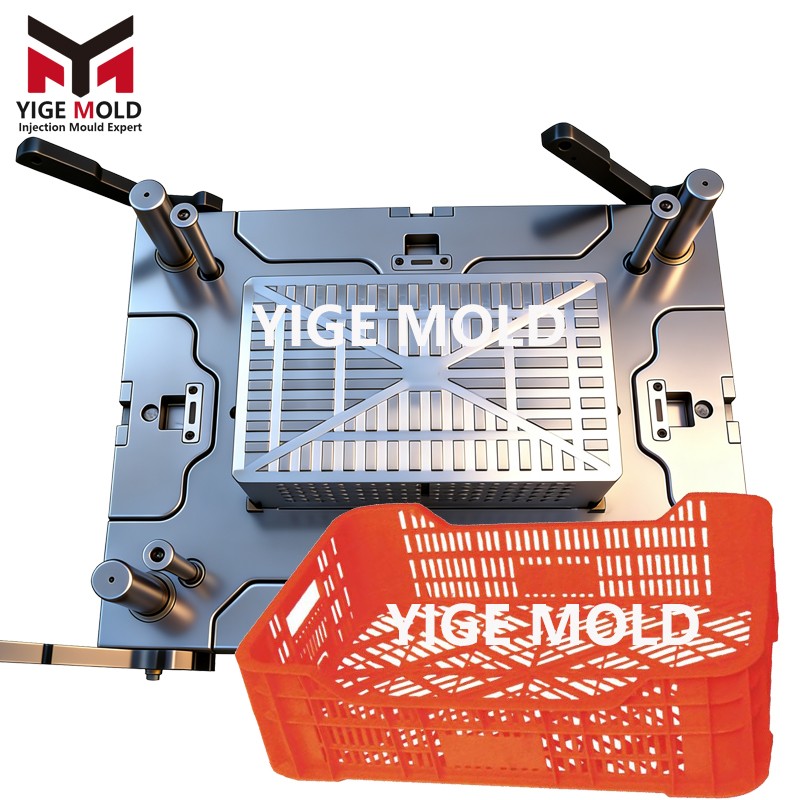
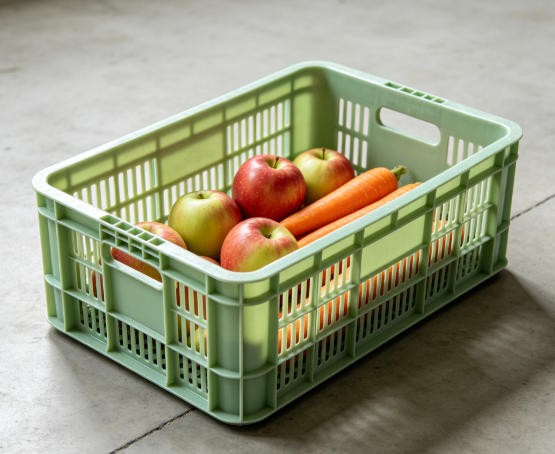
Injection molds for fruit and vegetable plastic crates are specialized tools designed for manufacturing these essential containers. Utilizing the injection molding process, molten plastic is injected into the mold cavity. Upon cooling and solidification, the plastic takes the precise shape and dimensions required for the crates. These molds hold a significant position across multiple industries.
In agriculture, plastic crates provide robust protection for harvested produce during sorting and packaging, minimizing transit damage. In supermarkets, neatly stacked crates facilitate attractive product displays. Moreover, their reusability aligns with modern environmental sustainability goals. The advent of these molds has enabled the mass production of high-quality crates at exceptional efficiency, providing strong support for the optimization of the fruit and vegetable supply chain and serving as a driving force behind the modernization of the agricultural sector.
1.2 Current Market Applications
Injection molds for fruit and vegetable crates enjoy extensive market application. Within the packaging sector, plastic crates are the preferred choice due to their lightweight nature, durability, and water resistance, effectively preserving produce freshness. In logistics, their stackable design saves space and reduces shipping costs, while their sturdiness minimizes collision damage during transport.
With the rise of fresh food e-commerce and increasing consumer expectations for quality and aesthetics, the demand for high-standard plastic crates continues to grow. Furthermore, supportive environmental policies favor reusable packaging solutions. Consequently, numerous enterprises are investing heavily in R&D to develop more efficient and precise injection molds to capture market share, indicating a highly promising future.
II. Key Points of Mold Design
2.1 Structural Design
The structural design of these molds is critical. The mold primarily consists of a cavity and a core. The cavity dictates the external shape of the crate and must be engineered precisely to meet dimensional and aesthetic standards. The core forms the internal structure, influencing wall thickness and internal capacity.
Designers must account for plastic flow dynamics and shrinkage rates, strategically placing parting lines and gates to ensure uniform cavity filling and prevent issues like short shots or flash. The mold structure must possess sufficient strength to withstand high injection pressures without deformation, ensuring consistent product quality and production efficiency. Only a rational structural design yields high-quality crates that meet market demands.
2.2 Material Selection
Material selection is paramount. Steel is the predominant choice; P20 steel is commonly used for these molds. As a pre-hardened steel, P20 is supplied at a hardness of 30-35 HRC, allowing for immediate machining without secondary heat treatment, satisfying hardness requirements.
Beyond hardness, factors such as wear resistance, corrosion resistance, and machinability must be considered. Given the high production volume of crates, the mold must endure long-term continuous operation; thus, high wear resistance extends mold life and reduces replacement frequency. Since molten plastic can be corrosive, good corrosion resistance protects the mold investment. Excellent machinability ensures the steel can be fabricated into precise structures, guaranteeing dimensional accuracy. Selecting the right material is the foundation of mold performance and production efficiency.
2.3 Cooling System Design
The cooling system plays a vital role in determining cycle times. After molten plastic is injected, rapid and uniform cooling is necessary for solidification. Common cooling methods include direct cooling and circulating cooling. While direct cooling is simpler, circulating cooling offers superior temperature uniformity.
When designing the cooling system, the layout of water channels must be calculated precisely based on mold geometry and plastic properties. Channel diameter, spacing, and distance from the cavity surface must be optimized to ensure efficient heat extraction. Parameters such as coolant temperature and flow rate must also be controlled. Proper cooling prevents internal stresses caused by overly rapid cooling or extended cycle times due to slow cooling. A well-designed cooling system is essential for both product quality and production efficiency.
III. Injection Molding Process Parameters
3.1 Temperature Control
Temperature regulation is crucial during molding. The barrel temperature must be set within the plastic's melting range to ensure adequate flow. For PP (Polypropylene), the typical barrel temperature ranges from 180-230°C. Temperatures too low result in poor melting, leading to short shots and surface defects; excessively high temperatures can cause material degradation and discoloration.
Mold temperature is generally maintained between 30-60°C. This range ensures rapid solidification while preventing excessive internal stress. Optimal mold temperature yields smooth surfaces and stable dimensions. Low mold temperatures risk warpage and cracking due to internal stress, whereas high temperatures extend cooling times, reducing efficiency. Precise control of both barrel and mold temperatures is necessary for high-quality output.
3.2 Pressure Adjustment
Injection pressure and holding pressure are key variables. Injection pressure must be adjusted based on material fluidity and mold complexity. For highly fluid materials like PE, lower pressure may suffice; for less fluid materials like PC, higher pressure is required. Insufficient pressure causes incomplete filling, while excessive pressure leads to flash and high internal stress.
Holding pressure is typically set at approximately 80% of the injection pressure. Its purpose is to compensate for material shrinkage during cooling, ensuring dimensional stability and surface finish. Inadequate holding pressure results in sink marks and voids, while excessive pressure induces internal stress, compromising mechanical properties and service life. Proper calibration of these pressures ensures compliance with quality standards.
3.3 Injection Speed and Cycle Time
Injection speed significantly impacts efficiency and product integrity. Excessive speed can cause turbulent flow, resulting in flow marks, weld lines, and air traps due to poor venting. Conversely, speeds that are too slow prolong fill times, risking cold slugs and surface imperfections.
The production cycle encompasses injection time, holding time, and cooling time. Injection and holding times depend on part size and wall thickness to ensure complete cavity filling and packing. Cooling time is dictated by mold temperature and material thermal properties to ensure demoldability. Cycles that are too short risk part deformation, while overly long cycles reduce productivity. Balancing these parameters optimizes both quality and throughput to meet market demands.
IV. Mold Manufacturing and Maintenance
4.1 Manufacturing Process Flow
The manufacturing process is complex and rigorous. It begins with the design phase, where engineers use CAD/CAE software to create 3D models and detailed drawings based on crate specifications. The machining phase starts with rough machining (milling, turning) to remove excess stock. This is followed by semi-finishing and finishing using CNC machining centers, EDM (Electrical Discharge Machining), and wire cutting to achieve the required precision for cavities and cores. Heat treatment (quenching and tempering) enhances hardness and wear resistance. During assembly, components are fitted together with precise tolerances. Finally, trial runs (test molding) are conducted to debug the mold, adjusting parameters until the mold consistently produces qualified parts.
4.2 Common Issues and Solutions
Common operational issues include wear, deformation, sticking, and venting problems. Wear on cavities and cores due to friction can lead to surface roughness and dimensional drift. Solutions include selecting high-hardness steels and applying surface treatments like hard chrome plating or nitriding. Deformation caused by high temperature and pressure may require repair via stress relieving or component replacement. Sticking can result from poor precision or inadequate lubrication; remedies involve adjusting clearances and applying appropriate lubricants. Poor venting leads to burn marks and bubbles, necessitating regular cleaning of vent slots to ensure airflow.
4.3 Maintenance Measures
Regular maintenance is vital for extending mold life. After each production run, residual plastic and contaminants should be cleaned from the mold surface. Fasteners must be checked and tightened regularly to prevent operational anomalies. Moving parts, such as slides and ejector pins, require inspection for smooth operation and periodic lubrication. The cooling system needs regular flushing to prevent clogging and leaks. Applying rust-preventative oil protects against corrosion. Maintaining detailed logs of usage, maintenance activities, and repairs provides valuable data for predictive maintenance, ultimately reducing costs and boosting efficiency.
V. Development Trends and Outlook
Market demand for fruit and vegetable crates is set to rise, driven by higher consumer expectations for quality and packaging aesthetics. The global shift toward sustainability favors reusable plastic crates, creating significant opportunities for mold manufacturers. Technologically, the integration of smart manufacturing and automation will enhance production efficiency and precision. Concurrently, advancements in novel steel alloys and surface coatings will yield molds with greater durability and performance. In summary, the market outlook for fruit and vegetable crate injection molds is robust, characterized by a trajectory toward greater efficiency, environmental sustainability, and intelligent automation, injecting powerful momentum into the modernization of the agricultural logistics industry.