Plastic clothes pin mold
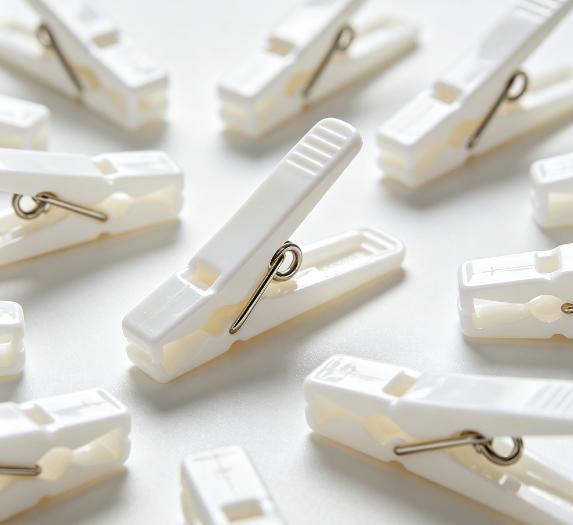
Introduction to Plastic Clothespin Molds
I. Overview of Plastic Clothespin Molds
1.1 Definition of Plastic Clothespin Molds
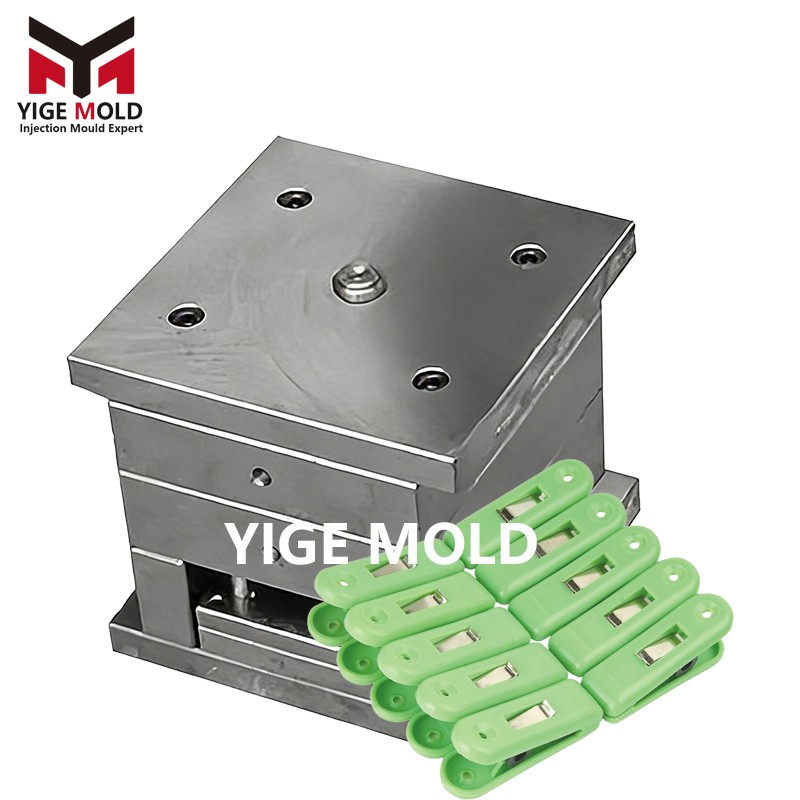
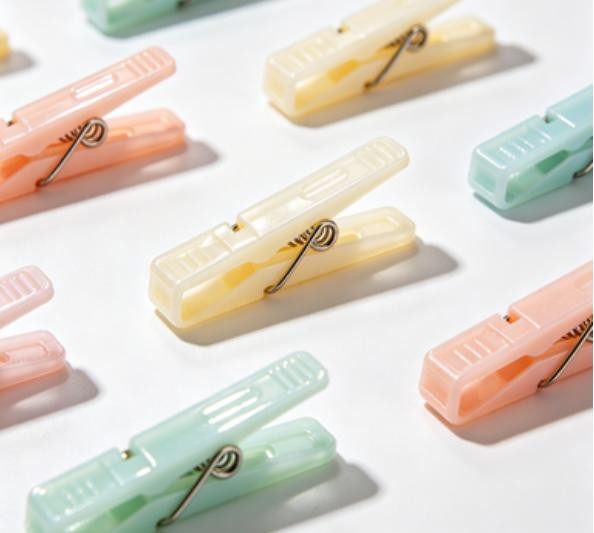
A plastic clothespin mold is a specialized tool designed for manufacturing plastic clothespins. In the production of plastic goods, molds play a vital role. Typically consisting of a fixed half (cavity side) and a moving half (core side), these molds work in conjunction with injection molding machines to inject molten plastic into the mold cavity. After cooling and solidification, the desired plastic clothespins are formed. Designed according to the specific shape, size, and functional requirements of the clothespin, these molds ensure high dimensional accuracy and excellent surface finish. Their fundamental purpose is to impart the specific shape and structure necessary for daily use—such as gripping garments securely and preventing slippage—providing convenience for laundry tasks.
1.2 Importance of Plastic Clothespin Molds
Plastic clothespin molds hold irreplaceable significance in production.
-
Quality: High-precision molds ensure accurate dimensions, smooth surfaces, and the absence of defects like burrs or sink marks, resulting in durable and reliable products.
-
Efficiency: Superior mold design, particularly optimized runner systems, allows for rapid and uniform filling of the cavity, shortening cooling times and enabling continuous production, which drastically increases output.
-
Cost: Rational design minimizes material waste and reduces scrap rates. Furthermore, extended mold lifespan lowers the production cost per unit, giving manufacturers a competitive edge in the market.
II. Classification of Plastic Clothespin Molds
2.1 Classification by Molding Process
-
Injection Molding Molds: The most common type. Plastic raw material is melted in the barrel of an injection molding machine and injected into the mold cavity under high pressure. This method is highly efficient, capable of producing complex shapes with high precision, making it ideal for mass production.
-
Extrusion Molding Molds: Molten plastic is forced through a die to form a continuous profile, which is then cooled and cut into individual clothespins. This process suits products with a consistent cross-section, offering a simple structure and low production costs.
2.2 Classification by Structural Features
-
Two-Plate Molds: Comprising a fixed plate and a moving plate, this structure is simple, cost-effective, and offers fast cycling. It is suitable for producing clothespins with simple geometries and moderate precision requirements.
-
Three-Plate Molds: Adds an intermediate plate (stripper plate) to the two-plate structure. This allows for pinpoint gating and automatic degating, making it suitable for clothespins requiring high aesthetic quality or specific gating locations. While more complex and costly to manufacture, it better meets diverse functional and appearance demands.
III. Design of Plastic Clothespin Molds
3.1 Design Principles
Design must adhere to several principles:
-
Quality Assurance: Ensuring dimensional accuracy and surface finish to meet usage requirements without defects.
-
Efficiency Improvement: Optimizing structure and runner design to shorten cycle times and increase output.
-
Cost Reduction: Rational material selection and design to minimize material consumption and processing costs, alongside extending mold life.
-
Operational Safety: Designing to prevent accidents during operation.
-
Maintainability: Ensuring the mold is easy to disassemble, inspect, and maintain to prolong its service life.
3.2 Key Design Points
-
Cavity Design: Determining the number, layout, and dimensions of cavities based on the clothespin's shape and precision. High surface finish in the cavity ensures good product appearance.
-
Gating System: Selecting the optimal gate location, type, and size based on the plastic's flowability and the part's wall thickness. The goal is to ensure rapid, uniform filling while avoiding defects like air traps or weld lines.
-
Cooling System: Arranging cooling channels rationally based on mold geometry and material properties. Channels should be close to the cavity surface, ensuring uniform temperature distribution to shorten cycle times and prevent warpage.
IV. Materials for Plastic Clothespin Molds
4.1 Common Materials
-
Steel: The traditional choice, offering high strength, hardness, wear resistance, and thermal fatigue resistance. It withstands high injection pressures and maintains precision over long production runs. Grades like Cr12MoV and SKD11 are used for high-volume, high-precision molds.
-
Aluminum Alloy: Known for its low density (lightweight) and excellent machinability. Its superior thermal conductivity allows for rapid and uniform heat dissipation, shortening cooling times. It is often used for molds requiring lightweight properties or specific thermal management.
4.2 Factors Influencing Material Selection
-
Product Requirements: High strength and precision necessitate high-grade steel, while weight and thermal conductivity might favor aluminum.
-
Production Cost: High-performance steels are expensive and difficult to machine. For low-volume production, the high tooling cost may outweigh the benefits.
-
Service Life: High-volume production demands wear-resistant, long-life materials to minimize changeovers.
-
Processability: The material's machinability and heat treatment characteristics affect the manufacturing cycle and overall cost.
V. Manufacturing Process of Plastic Clothespin Molds
5.1 Main Manufacturing Procedures
The process is systematic and rigorous:
-
Task Acceptance: Clarifying product drawings, specifications, and technical requirements.
-
Data Analysis: Digesting information regarding part design, molding processes, and equipment capabilities.
-
Design: Finalizing the mold structure and dimensions.
-
Machining: Using conventional methods (milling, grinding, drilling) for rough processing of the blank.
-
Heat Treatment: Enhancing the mechanical properties of the material.
-
Special Machining: Utilizing EDM (Electrical Discharge Machining) and Wire Cutting for complex structures and fine details.
-
Assembly & Debugging: Precisely assembling components and testing performance.
-
Acceptance: Final inspection before delivery.
5.2 Key Manufacturing Technologies
-
CNC Machining: Controls machine tools via computer programs to automatically process the mold. It offers high precision and efficiency, accurately creating complex cavities and structures.
-
EDM (Electrical Discharge Machining): Removes material through electrical discharges between an electrode and the workpiece. It is essential for processing hard materials, narrow slots, and sharp corners that are difficult to machine conventionally, improving mold durability and finish.
VI. Market Status and Trends of Plastic Clothespin Molds
6.1 Market Status
The market currently exhibits steady growth.
-
Scale: Driven by the stable development of the plastic goods industry, the market for these molds continues to expand.
-
Demand: Rising living standards have increased demand for functional and aesthetically pleasing clothespins, leading to diverse mold requirements.
-
Competition: The market is highly competitive, with numerous SMEs and large enterprises competing based on technology, scale, and brand. Both price wars and quality competition exist; some companies compete on low cost, while others focus on high performance to win customers.