Cake crate mold
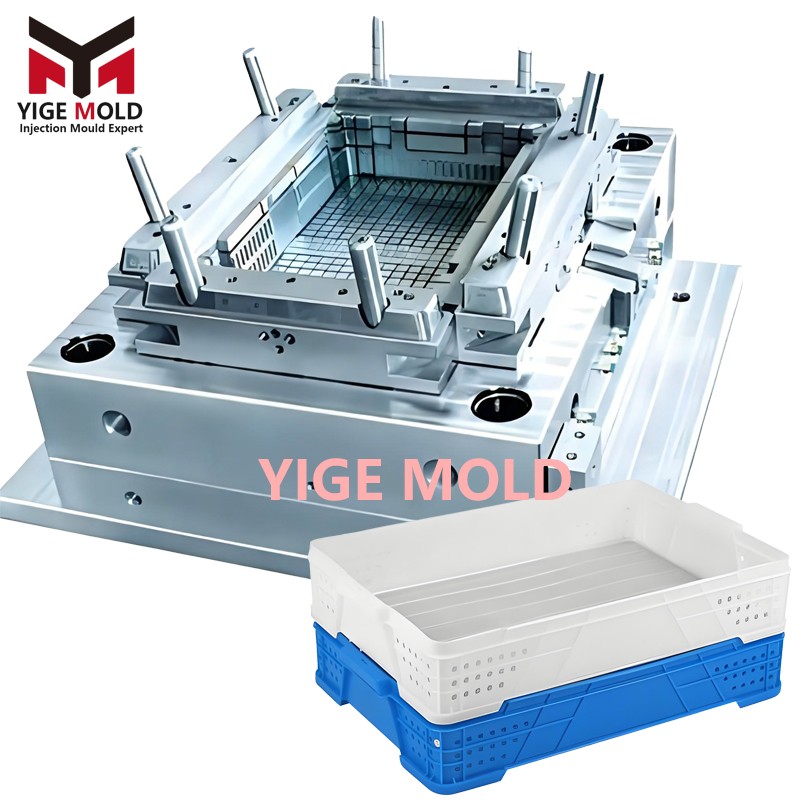
Cake Tote Mold: The Engineering Foundation of a Precision Protection System
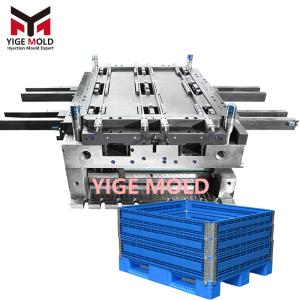
A Cake Tote Mold is a highly complex injection mold used to manufacture specialized logistics containers designed for transporting delicate, high-value cakes and pastries. In essence, it is a precision-engineered system built for ultimate protection. Its entire design and manufacturing rationale revolve around a single core objective: achieving absolute product integrity—zero contact, zero displacement, zero impact—within a dynamic logistics environment. The mold's own technical execution is the prerequisite for meeting this goal.
I. Design Core: Function-Driven, Multi-System Integration
The mold design is not a simple replication of a cavity; it is the pre-construction and integration of multiple active protection systems.
-
The Core: Adaptive Internal Cavity Positioning System
-
Modular Insert Design: The mold cavity is not a fixed structure. Its interior walls are designed with precision guide rails to accommodate interchangeable or adjustable modular inserts. This allows the same core mold frame to achieve precise positioning for different cake base sizes (e.g., 6/8/10-inch) and shapes (round, square, custom) simply by changing inserts. This demands exceptional versatility in the mold base and micrometer-level precision in the insert interfaces.
-
Honeycomb Matrix and Contoured Surfaces: An alternative approach involves the mold directly forming a highly detailed honeycomb matrix base or multi-tiered contoured surfaces. These structures, calculated for optimal distribution, support the cake box with minimal contact area (point or line contact), dispersing pressure and utilizing air damping to absorb vertical vibration. This places extreme demands on the CNC machining and EDM (Electrical Discharge Machining) accuracy of the mold, requiring nanometer-level surface finishing.
-
-
The Key: Dynamic Buffer and Lid-Coupling System
-
Multi-Material Composite Structure: To create the elastic buffer on the inside of the lid, molds commonly employ multi-material co-injection or insert molding designs. After forming the rigid base (e.g., PP), the mold must inject a soft material (e.g., TPE, silicone) into precise locations to form arrayed elastic contact points. This requires the mold to have sophisticated rotating, sliding, or two-shot injection units, with precise control over flow paths, temperatures, and bonding interfaces for the different materials.
-
Negative Pressure Seal and Pressure-Equalizing Design: The sealing lip between the lid and the base is engineered as a multi-channel labyrinth structure. The mold parting line requires extremely complex, tightly mated concave-convex sealing profiles, necessitating ultra-precision wire EDM cutting and nitriding treatment of mating surfaces. This ensures the seal remains effective after tens of thousands of cycles and creates a distributed negative pressure (gentle vacuum) when closed, stabilizing the contents.
-
-
The Foundation: Structural Skeleton for Ultimate Stability
-
Variable Thickness and Conformal Reinforcement: Every ridge, curve, and contour on the tote's exterior is, in reality, a conformally designed reinforcing rib optimized through Finite Element Analysis (FEA). During mold design, the layout and flow of cooling channels must be dynamically adjusted according to stress maps to accommodate varying wall thicknesses. This ensures uniform cooling of large, thin-walled parts during rapid injection cycles, eliminating residual stress and preventing creep deformation over the product's lifetime.
-
II. Manufacturing Realization: Building Reliability at the Micron Scale
Translating design into a production-ready mold is an exercise in applying cutting-edge manufacturing processes.
-
Ultra-High Precision Cavity Machining:
-
Mirror-Finish EDM and High-Speed Milling: All cavity and core surfaces that contact the product undergo precision mirror-finish EDM machining using graphite electrodes to achieve a surface finish of A1 grade or better. This ensures flawless demolding and prevents any microscopic imperfections from damaging cake packaging. Complex curves are finished in a single operation using 5-axis high-speed machining centers, guaranteeing continuity and accuracy.
-
Micro-Feature Machining: Micro-structures like positioning clips, ventilation micro-holes, and elastic contact points require micro-EDM and laser etching technologies. This guarantees clear, dimensionally stable features free of burrs and stress concentration points.
-
-
Multi-Circuit, High-Efficiency Temperature Control System:
-
This is the "lifeline" of the mold. To address the large, flat surfaces and numerous ribs of a cake tote, it is essential to implement 3D-printed conformal cooling channels or highly efficient beryllium copper insert cooling. These cooling channels, like a network of capillaries, must run uniformly within 3-5 mm of the cavity surface to ensure heat is instantly and evenly extracted. This is the decisive technology for controlling part warpage and minimizing cycle time—a direct determinant of production cost.
-
-
Complex Actions and High-Longevity Structure:
-
A single mold may integrate dozens of sliders, lifters, and hydraulic cylinders to facilitate the demolding of complex undercuts (e.g., internal clips, recesses for elastic parts). The guidance and wear resistance of all moving components are critical to service life. Sliders are made from high-hardness powder metallurgy steel and coated with titanium-based layers to withstand high-frequency friction. Guide components employ needle roller bearings to maintain precision over hundreds of thousands of cycles.
-
-
Systematic Validation and Tuning:
-
Upon completion, the mold undergoes fine-tuned trial runs, guided by mold flow simulation software. By embedding sensors and optimizing filling speed, packing pressure, and cooling profiles, a stable process window is established. This window must simultaneously satisfy dimensional tolerance (e.g., ±0.05mm), surface finish, and cycle time (often targeted at ≤60 seconds). The mold is delivered alongside this set of perfected process parameters.
-
III. Value Proposition: Paying a Premium for Certainty
The high cost of a cake tote mold purchases "certainty" at the end of the supply chain.
-
The Monetization of Risk: The investment in the mold essentially converts the unpredictable risk of transport damage into a definite, amortizable fixed asset cost. Each product that arrives perfectly intact pays a minuscule "insurance premium" against this secured certainty.
-
Guarantee of Brand Consistency: The mold ensures every tote has identical physical properties. This means every cake, regardless of its city destination, receives the same level of protection, underpinning a uniform brand service standard.
-
The Hidden Efficiency Engine: The highly standardized product from the mold enables the ultimate optimization of loading, stacking, and cleaning processes. This gain in efficiency represents the secondary monetization of the mold's value in the dimension of time.
Conclusion
The Cake Tote Mold is the product of the convergence of modern precision manufacturing and supply chain risk management. Its value lies not in producing a container, but in replicating a set of absolutely reliable physical rules. Under these rules, bumps are dampened, shocks are absorbed, and movement is locked. Every detail of its design and manufacture is an engineering commitment to "perfect arrival." It is a silent, strategic asset hidden at the end of the production line, yet one that directly defines the consumer experience at the point of delivery.