Lifting Swivel Chair Mould
Overview of Lifting Swivel Chair Mold Design and Manufacturing
I. Definition and Application Context
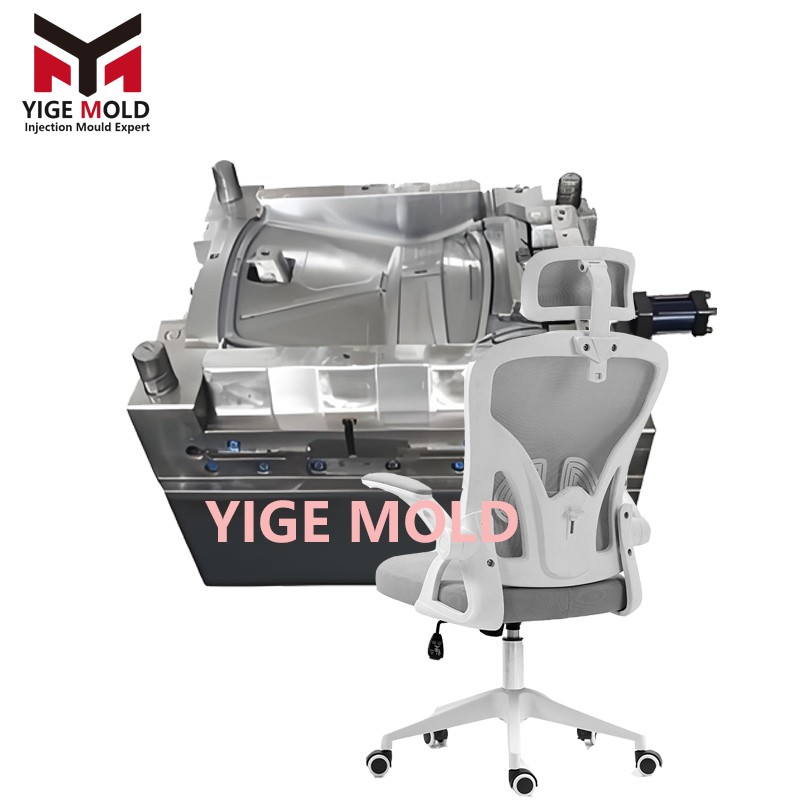
Lifting swivel chair molds are specialized tooling used to produce plastic and metal components for height-adjustable, rotating chairs—including seats, backrests, armrests, star bases, chassis, and gas lift covers. With growing demand for ergonomic seating in office and home environments, these molds must ensure mass-production consistency while balancing comfort contours, structural strength, and long-term durability. They represent a category of furniture molds with relatively high complexity.
II. Mold Types and Typical Structures
(A) Injection Molds: Primary Tooling for Plastic Parts
Plastic parts for lifting swivel chairs typically feature uneven wall thicknesses, complex curves, and multiple assembly interfaces, requiring tailored mold designs:
-
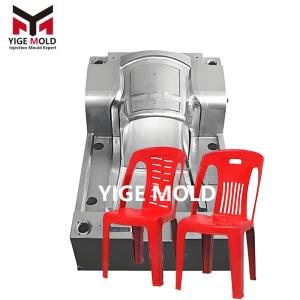
Seat and Backrest Molds: Often deep-cavity shells with lumbar supports, leg recesses, and other functional surfaces. Multi-point gating or hybrid hot/cold runner systems ensure balanced filling; ejection systems combine angled lifters and sliders to handle undercuts and side-wall features like armrest roots and lumbar contours.
-
Structural Connector Molds: Components such as chassis and gas lift sockets commonly use glass-fiber-reinforced materials. Molds employ wear-resistant steels (e.g., P20, S136 series), with replaceable inserts at threaded-boss and high-wear areas.
-
Appearance Part Molds: Armrest covers and decorative caps prioritize surface finish. Cavities receive mirror polishing or plating, paired with fine venting to minimize flow marks and air traps.
(B) Die-Casting Molds: Core Tooling for Metal Load-Bearing Parts
Aluminum die-cast parts like star bases and heavy-duty chassis endure repeated lifting and swiveling loads. Key design focuses include:
-
Gating and venting systems that promote smooth metal flow, reducing air entrapment and cold shuts;
-
Cores and sliders made from hot-work tool steel with surface hardening to resist molten-aluminum erosion and thermal fatigue;
-
Machining allowances and locating datums pre-positioned for subsequent drilling and tapping, ensuring hole accuracy and assembly alignment.
III. Key Technical Design Requirements
(A) Structural Reliability Under Dynamic Loading
Lifting motions shift the center of gravity, generating cyclic stress. Mold designs optimize gate location and packing profiles to position weld lines away from high-stress zones (armrest mounts, chassis lock holes). Rib patterns and gradual wall-thickness transitions enhance local stiffness, minimizing creep deformation over extended use and ensuring fatigue life meets tens of thousands of lift cycles.
(B) Manufacturability of Ergonomic Surfaces
Comfort-driven seat and backrest curves must translate into machinable cavity surfaces. Multi-axis CNC machining and precision EDM maintain surface continuity, holding errors in lumbar support and depth-transition zones within ~0.1 mm, aligning styling intent with production feasibility.
(C) Assembly Accuracy Across Multiple Components
The lifting mechanism involves layered assembly of gas lifts, chassis, seat, and more. Cumulative part tolerances must stay below 0.3–0.5 mm. Molds achieve this via unified parting-line datums, tight guide-pin fits, and shrinkage compensation, minimizing post-processing and enabling direct assembly of major subassemblies.
(D) Balancing Service Life and Maintenance Economy
High-grade tool steels and modular insert designs in wear-prone areas allow quick replacement; standardized mold bases reduce spare-part costs. Target service life typically reaches 800,000–1 million shots, with reject rates kept below 0.5%.
IV. Manufacturing Process and Quality Control
-
Precision Machining Chain: Cavities are primarily CNC-milled, supplemented by slow-wire EDM and spark erosion for sharp corners and complex profiles; critical mating surfaces hold ±0.01 mm accuracy.
-
Heat Treatment and Surface Hardening: Quenching, tempering, and case hardening are applied based on material abrasion and corrosion behavior to improve wear/chemical resistance.
-
Trial Runs and Parameter Tuning: Iterative trials adjust temperature, pressure, and cooling time to correct localized sink marks and warpage until parts meet dimensional and load-test standards.
-
Inspection System: Finished parts undergo sampling for dimensions, static load capacity, and durability; molds are tracked per shot count and maintenance status to ensure batch-to-batch stability.
V. Industry Evolution Directions
-
Material Compatibility Expansion: Adapting to recycled plastics and highly filled compounds by optimizing venting and release designs to mitigate sticking and degradation issues.
-
Lightweighting with Strength: Optimizing wall-thickness distribution and rib topology to reduce weight while maintaining rigidity, lowering logistics costs and improving user experience.
-
Production Efficiency Upgrades: Streamlining runners and cooling layouts to shorten cycle times; quick-change and modular designs cut mold-changeover durations, supporting mixed-model production lines.
VI. Conclusion
Lifting swivel chair molds are a critical bridge between product design and volume manufacturing, directly influencing seating safety, comfort, and cost. To meet market demands for both quality and efficiency, mold engineering must deepen integration among structure, material, and process—achieving reliability and economy through refined execution, thereby providing stable support for the furniture industry.